New works in the collections 2025
Here we showcase some of the works that Royal Danish Library has received during 2025.
The new acquisitions of 2025 testify to the breadth and depth of the collections at Royal Danish Library. From medieval philosophy and eighteenth-century bookbinding masterpieces to experimental performing arts, pioneers of women’s music, modern architecture, and hundreds of thousands of aerial photographs of the Danish landscape, this year’s additions open up both intimate stories and broader cultural-historical perspectives.
What these new materials have in common is that they not only preserve the past, but also bring it to life. They offer researchers, students, and the wider public new opportunities to explore Denmark’s cultural heritage across time, art forms, and media.
Photographs by Jonals Co.
Pioneers of advertising photography in Denmark: a unique album reveals modernism’s sharp eye for form, material, and industry.
Jonals Co. was Denmark’s first advertising photography company and opened at Kgs. Nytorv 22 in 1926. Its director, Herman Bente, rejected the art photography movement known as “Pictorialism”. Amateur photographers who had mastered the noble photographic techniques and created beautiful landscape images were criticised as hopeless romantics. Blurred images of nature with countless nuances were now to be replaced by sharp urban images with stark contrasts. At the same time as modern movements such as “Neues Sehen” in Germany and “Straight Photography” in the United States were flourishing, Bente championed modern photography in Denmark.
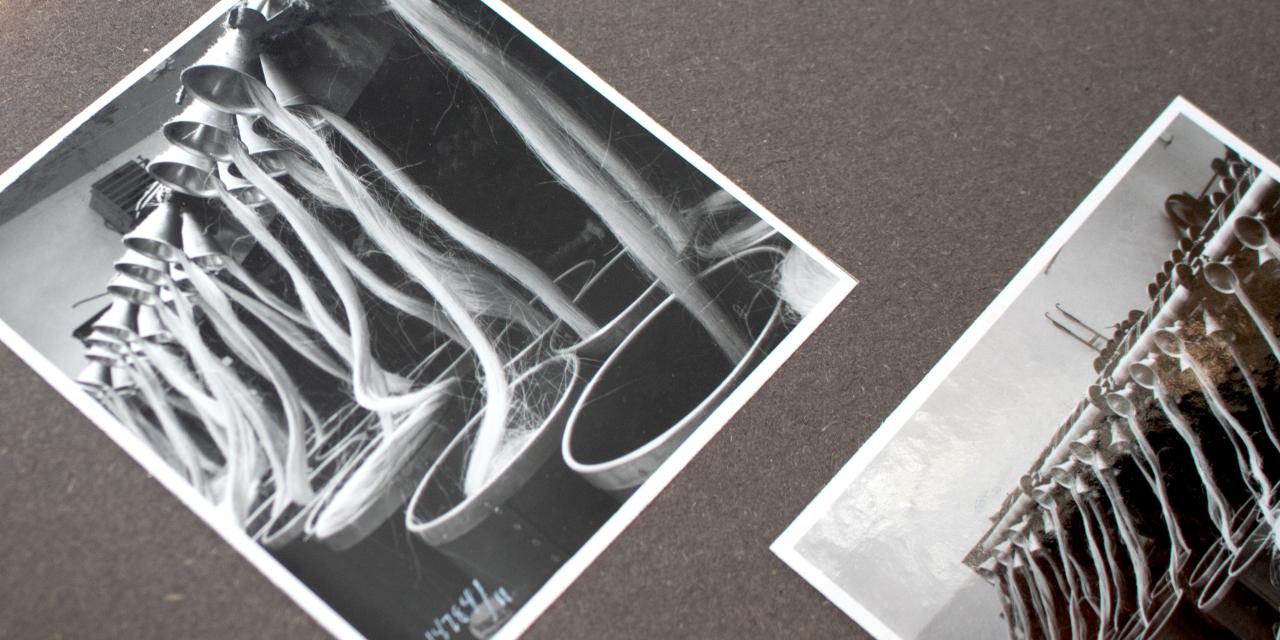
Jonals Co. became known for its close collaboration with designers from the golden age of Danish design, such as Kay Bojesen, Jakob Bang, and Poul Henningsen, whose products the company photographed from surprising angles and with striking use of shadow.
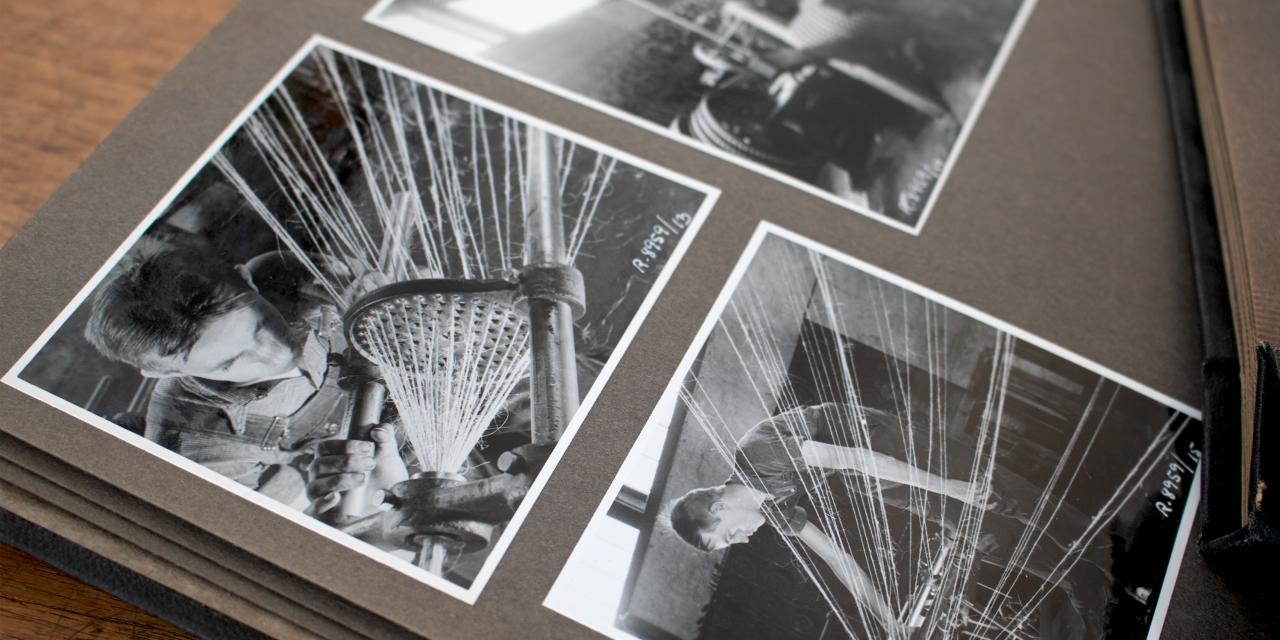
The photographs were promoted as a contrast to pictorialist art photography, but they in fact became a form of art in their own right. Asger Jorn and the other editors of the magazine Helhesten were inspired by the French Surrealists, who cultivated photographs of entirely ordinary objects that, in the images, took on a mysterious quality. In one issue of the magazine, they published one of Jonals Co.’s photographs of the threads inside a loom alongside a close-up of the rounded forms of a woman’s body. The images became abstract motifs with clear symbolic overtones.
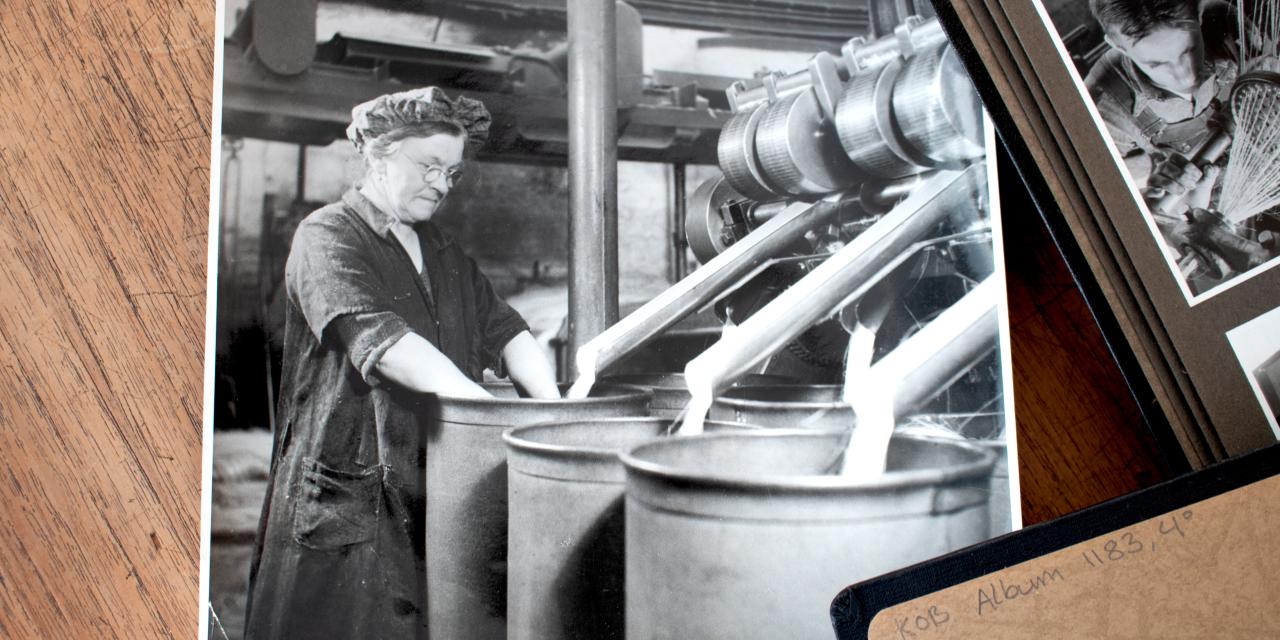
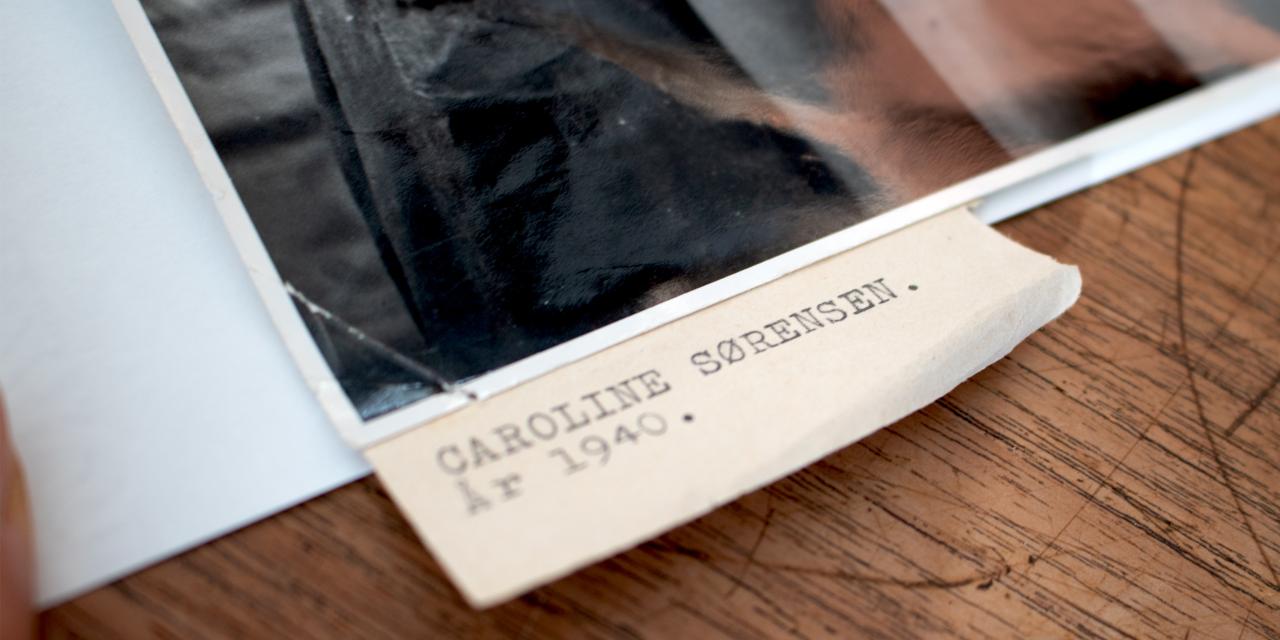
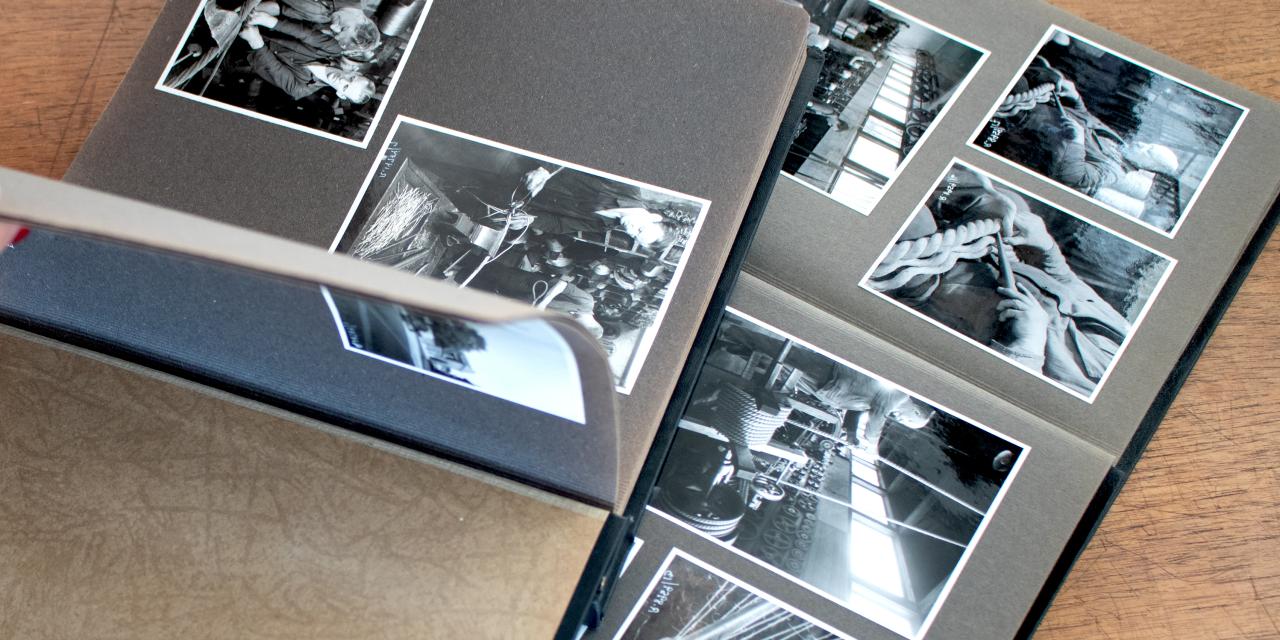
The photograph of the inside of the loom was taken for an article in Nyt Tidsskrift for Kunstindustri, but it could just as easily have come from this album from Randers Rebslaaeri. In several of the album’s photographs, the photographer focuses on bundles of rope and the iron strands used in thick steel cables, giving the materials an unexpectedly eerie quality. The album from Randers Rebslaaeri was donated to the library by Randers City Archives. It was created to mark the rope-making mill’s 100th anniversary in 1940.
The album is on display in the photography collection exhibition The World Around Us at The Black Diamond.
Jakob Spillemand's Music Book
One of Denmark’s most comprehensive fiddlers’ books, containing more than 1,000 nineteenth-century melodies, has now been preserved, conserved, and prepared for digitisation.
Jakob Christensen (1804–1881) from Vetterslev was a well-known fiddler in the Ringsted area during the 19th century. Like most fiddlers, he kept a music book containing many of the dance melodies he performed. Jakob Spillemand's music book has been known in folk music circles for many years, but until 2025 the book remained in the family’s possession, and at Royal Danish Library we only had access to a photocopy. The library’s folklore collection has now acquired the book, which is a little gem within our extensive collection of fiddlers’ books. Containing more than 1,000 melodies, it is one of the most comprehensive music manuscripts of its kind. Jakob Spillemand himself appears to have written down approximately 800 of the first melodies.
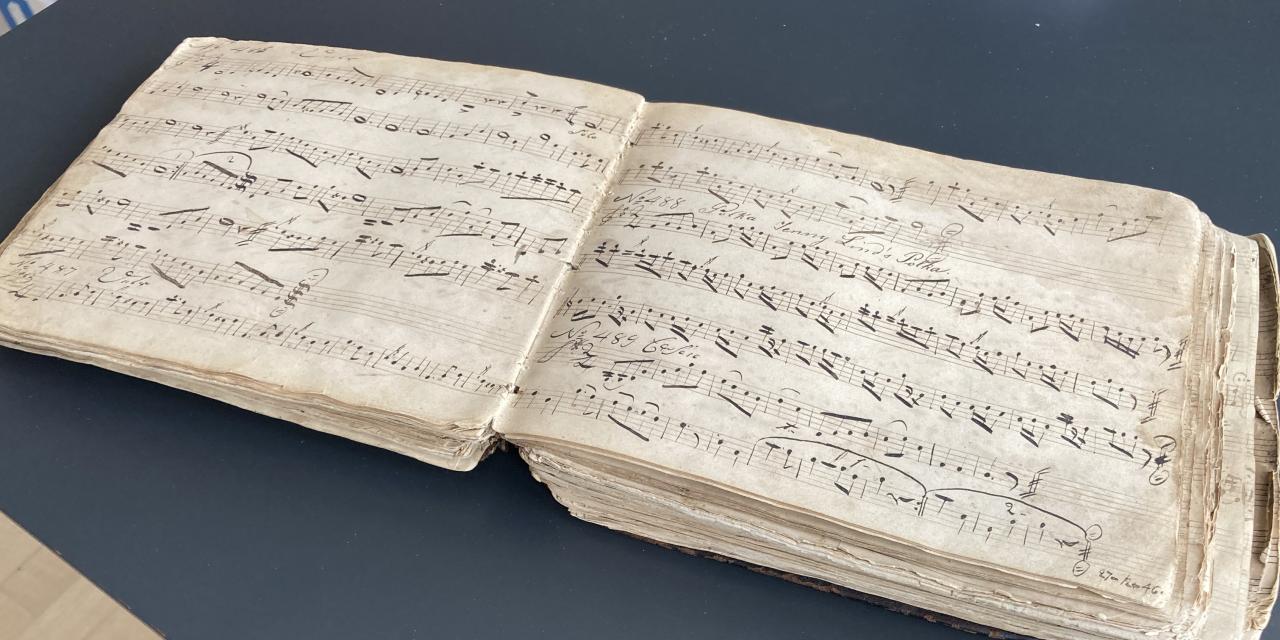
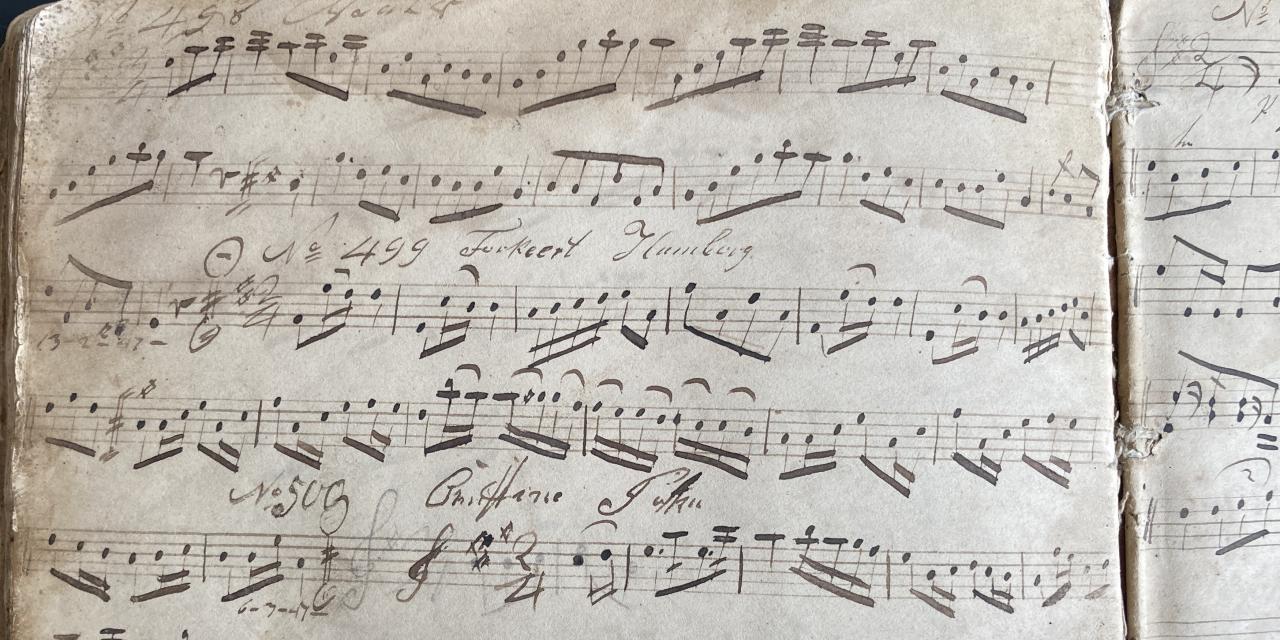

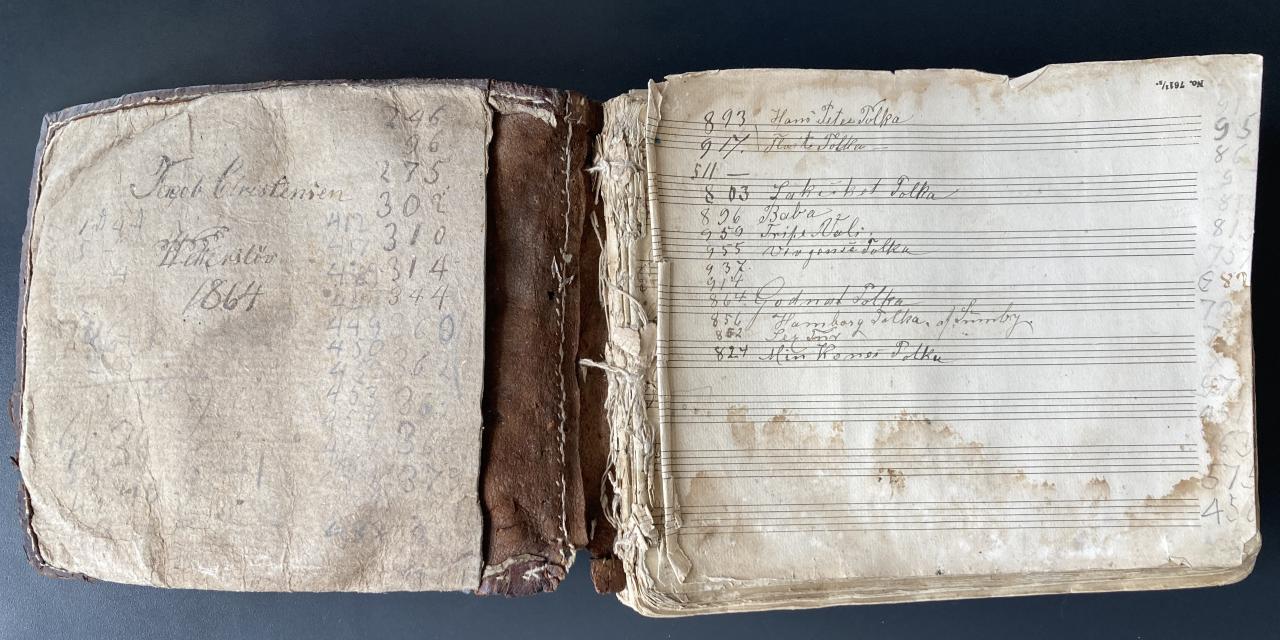
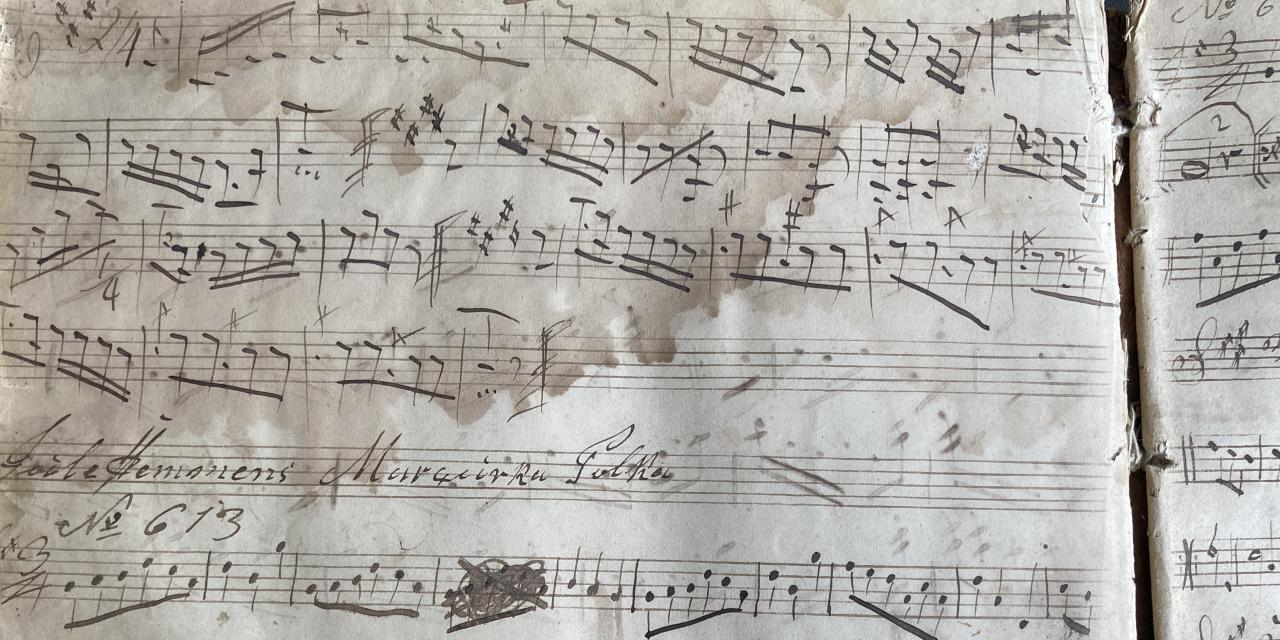
The book is beautifully bound in hand-stitched leather, but like other fiddlers’ books it has been used extensively, and both the paper and the binding therefore show signs of wear. Our skilled conservators have worked on the book in the conservation workshop and stabilised the most fragile pages sufficiently for it now to be digitised and made available through our digital collections.
You can read more about Jakob Spillemand in Lauritz Hansen’s book From the Saga of the Old Fiddler (1933).
Carsten Hoff's archive
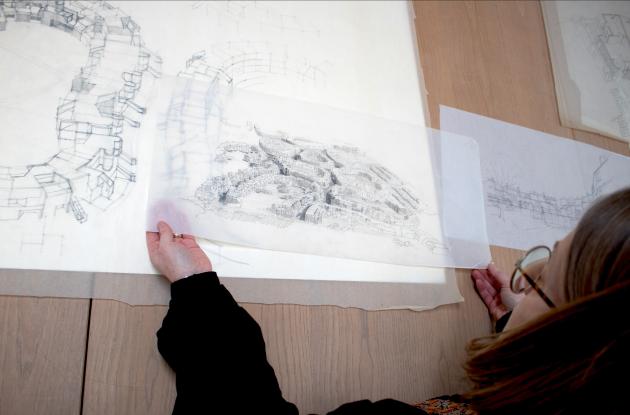
Drawings, models, and archives from an experimental architect who placed the human being and the body at the centre of architecture.
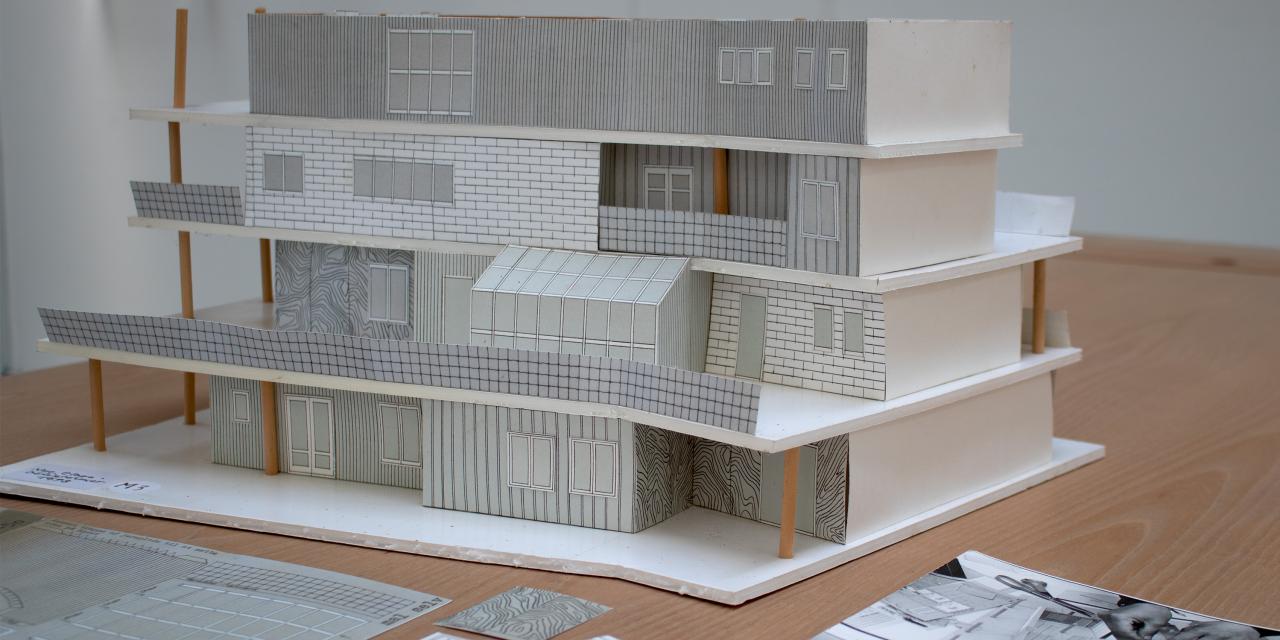
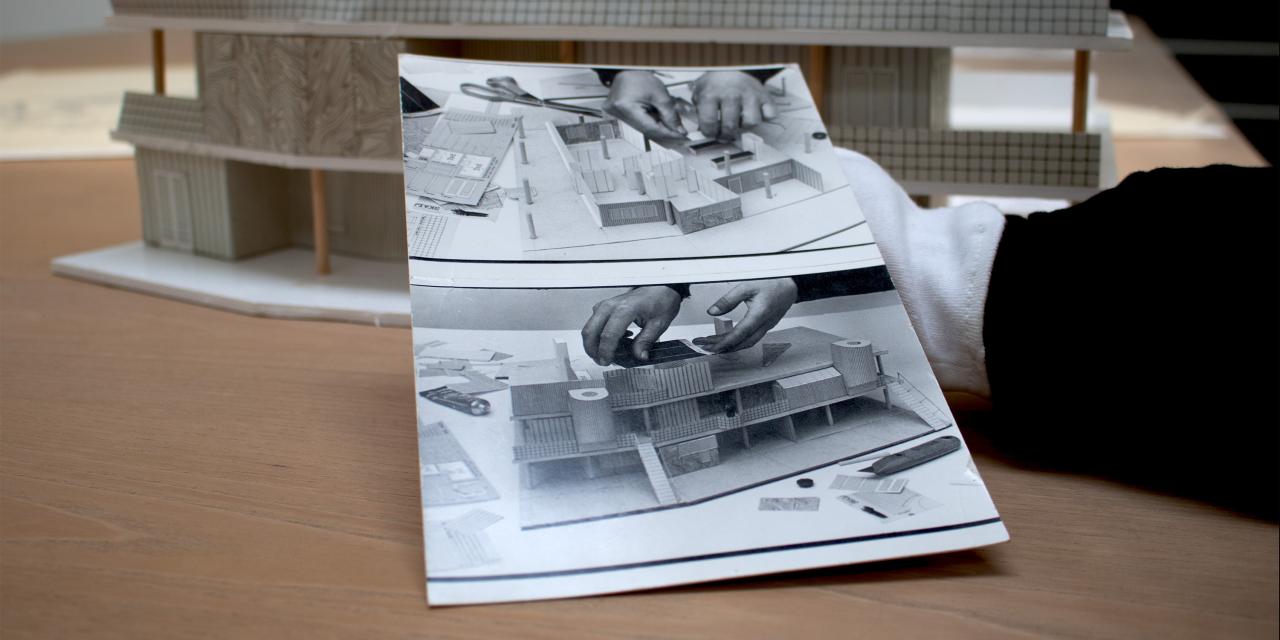
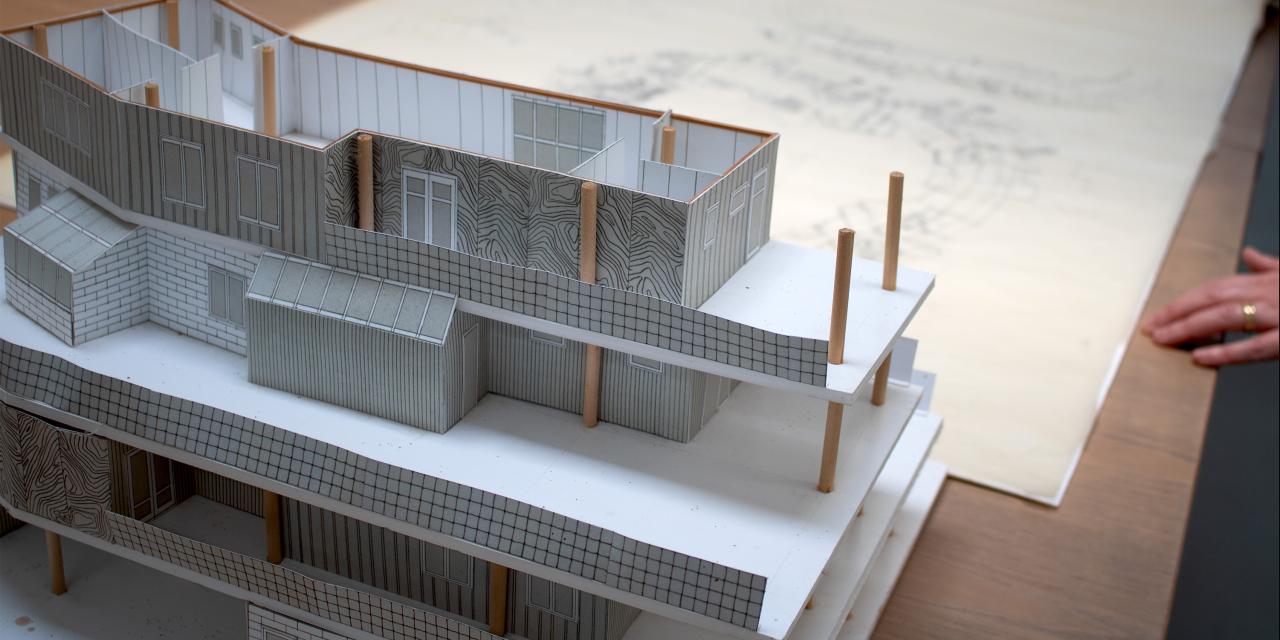
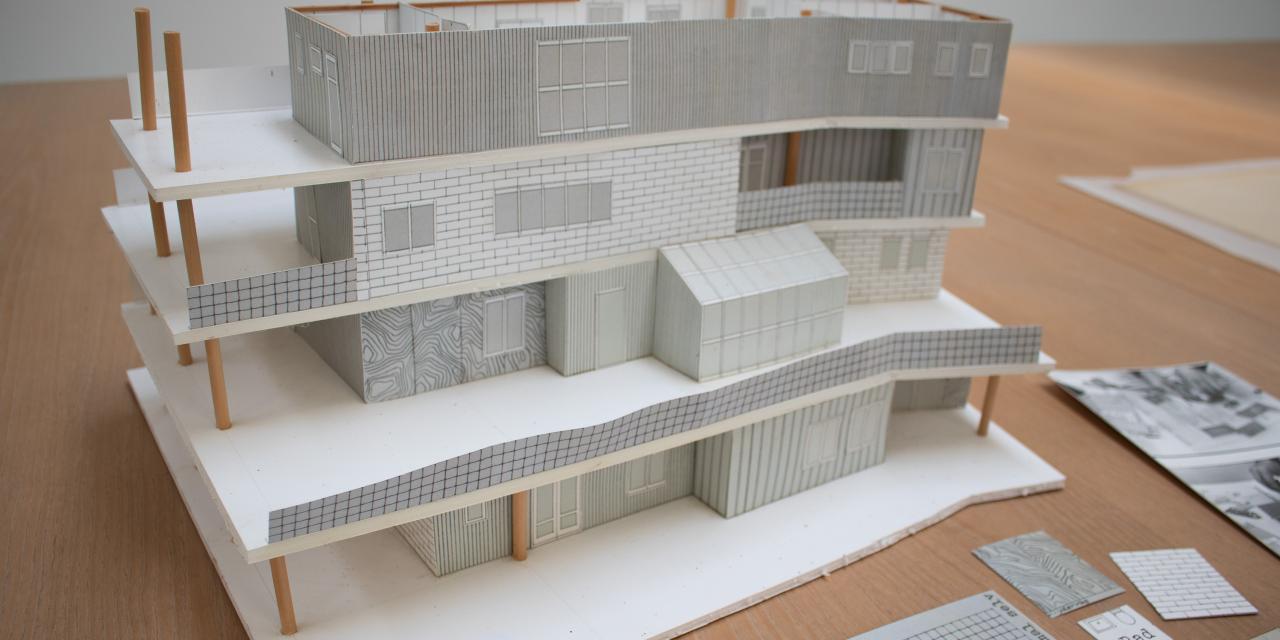
The architect Carsten Hoff (1934–2025), who passed away on the final day of the year, succeeded in donating his archive to Royal Danish Library’s Architecture Collection before his death. The archive contains drawings, models, business records, and other archival material documenting the work and network of a unique architect. The point of departure for Hoff’s architectural practice was that individuals should have the opportunity to shape their own homes and take part in the architectural process. Furthermore, Hoff believed that architecture should be experienced through the body rather than regarded merely as a visual or aesthetic matter.
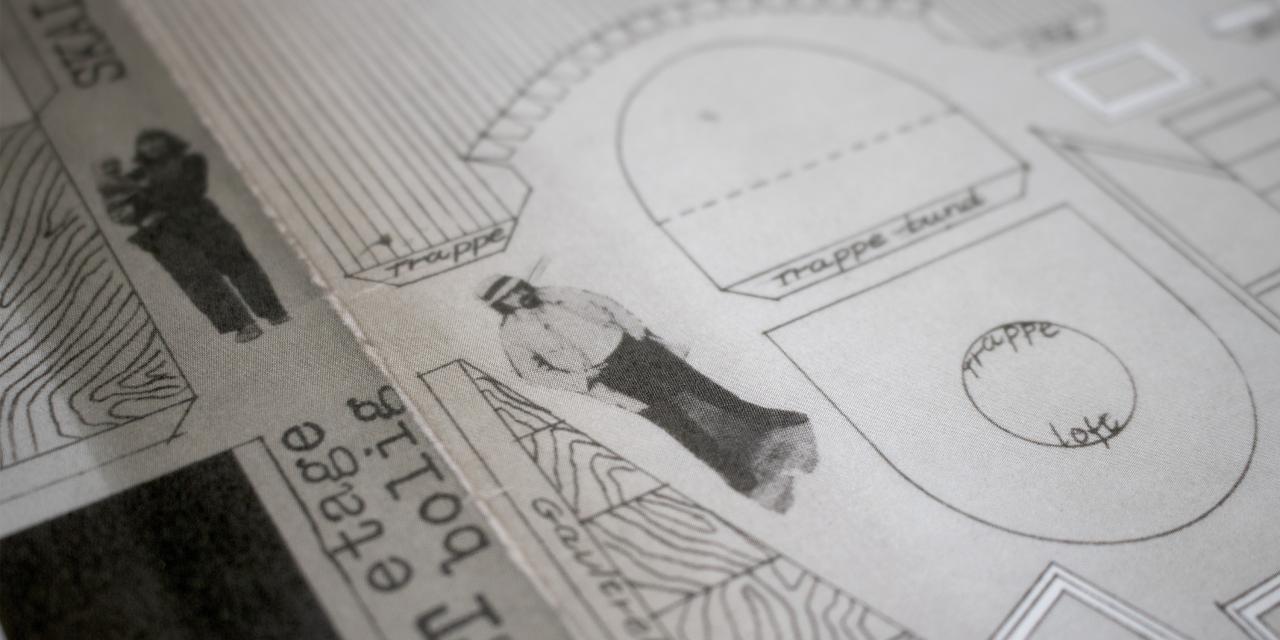
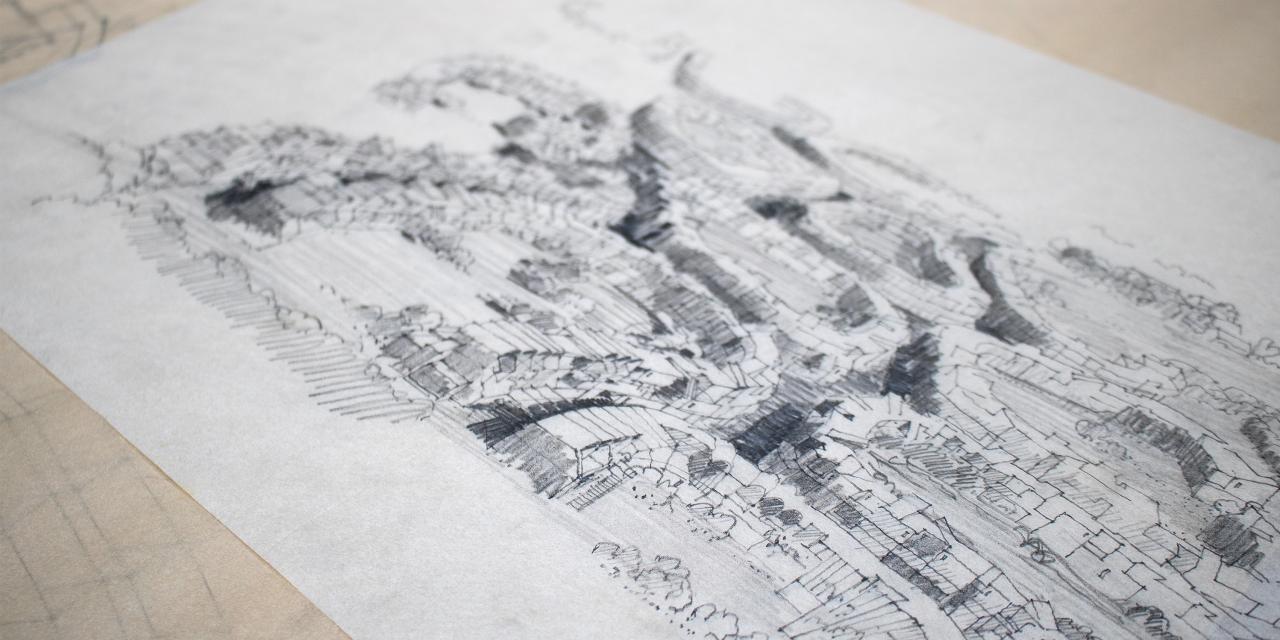
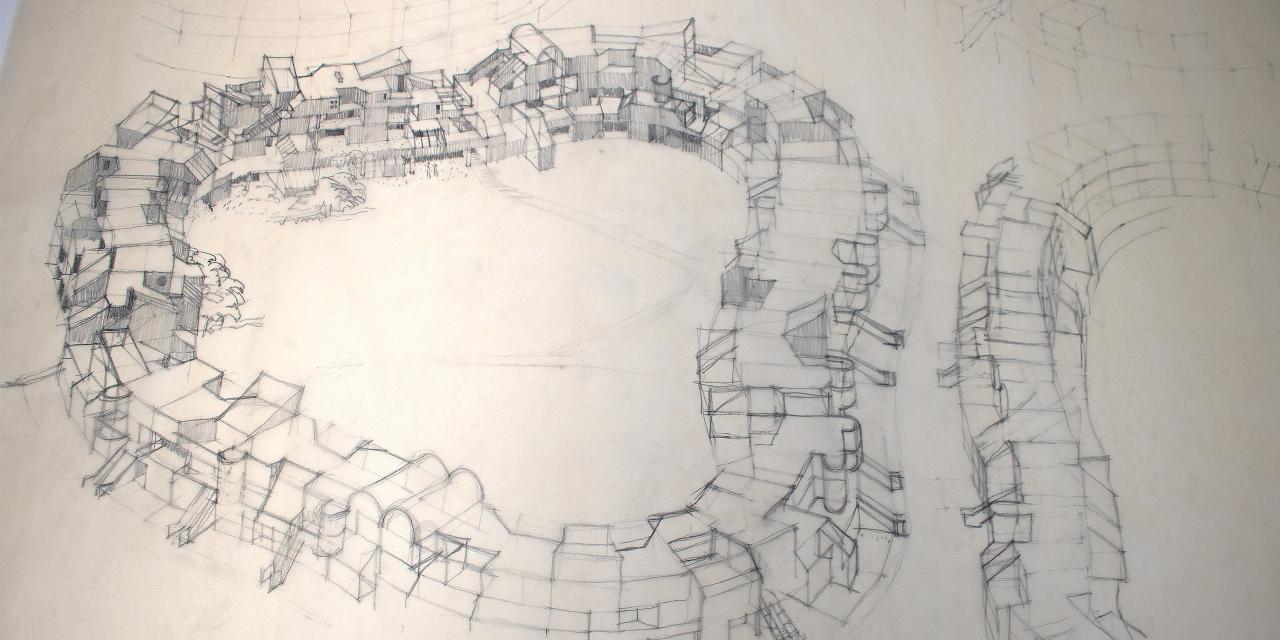
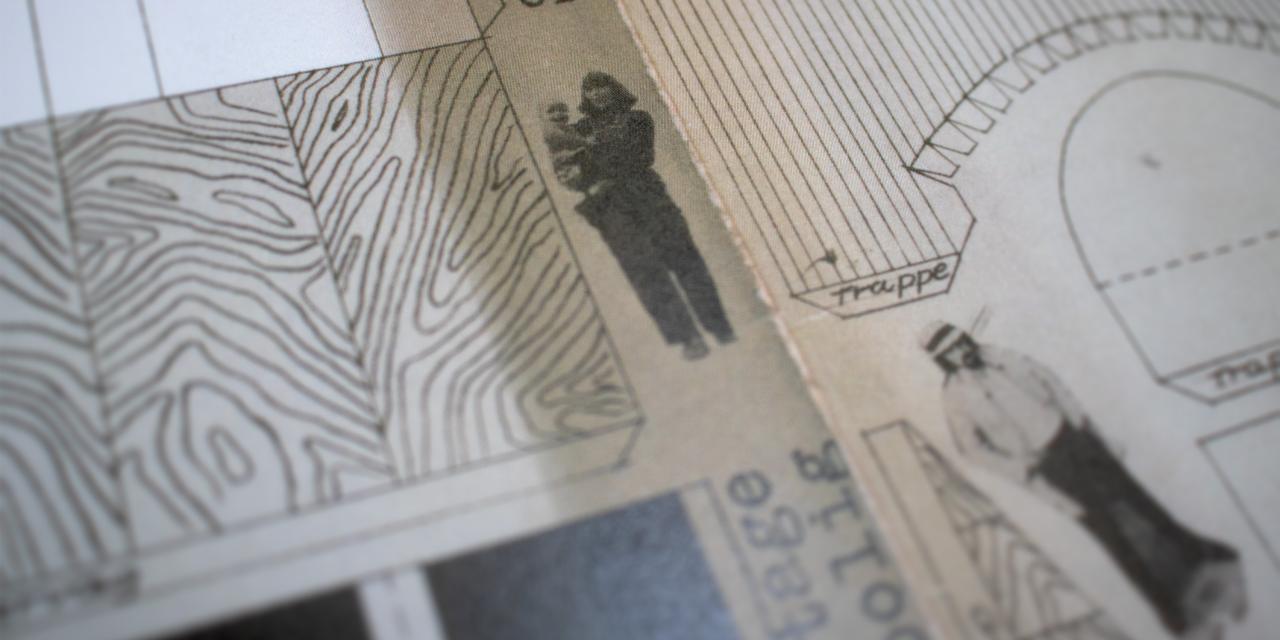
Carsten Hoff graduated from the Royal Danish Academy of Fine Arts School of Architecture in 1964. He worked with both exhibitions and activist projects and, together with his wife Susanne Ussing, ran the architectural practice Ussing and Hoff. The pair became particularly well known for their architectural experiments at Thylejren in 1970 and on Vejlø. Together, Ussing and Hoff sought to challenge conventional housing construction and develop new ways of living in which residents were placed at the centre. The starting point for the experiment at Thylejren was a structure made of cardboard, plastic, and tarpaulins that everyone could help shape and inhabit.
Hoff later designed, among other projects, Kulturhuset Toftlund (1990), the new version of Helgoland bathing facility (2004), a number of private homes, and renovations of social housing. The archive documents Hoff’s important body of work, and once it has been catalogued, it will be possible to request access to it in the Reading Room at Royal Danish Library in Søborg.
Bookbinding - a masterpiece
The story of Christian IV in an exquisite full-leather binding that showcases the full range of the bookbinder’s craft.
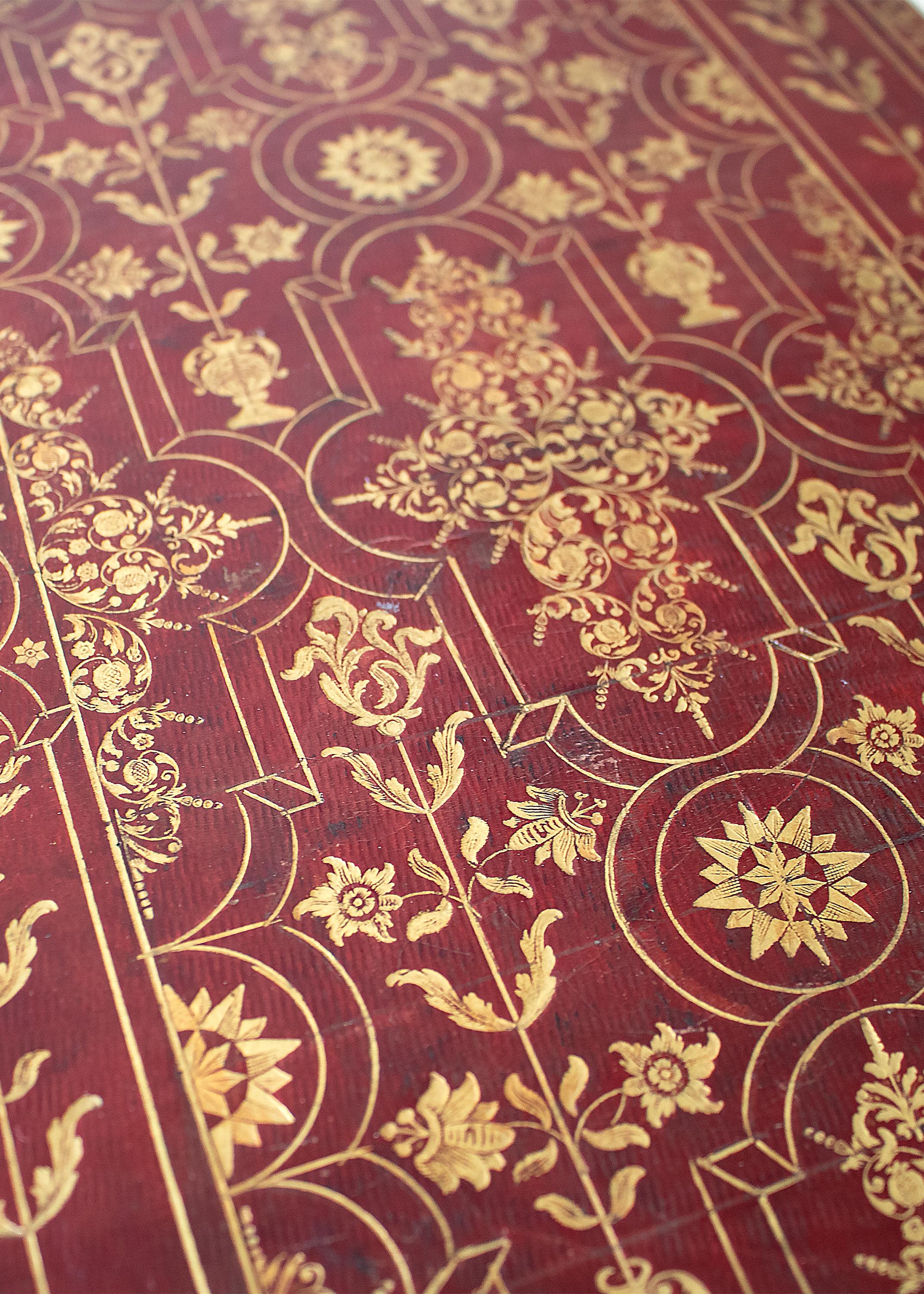
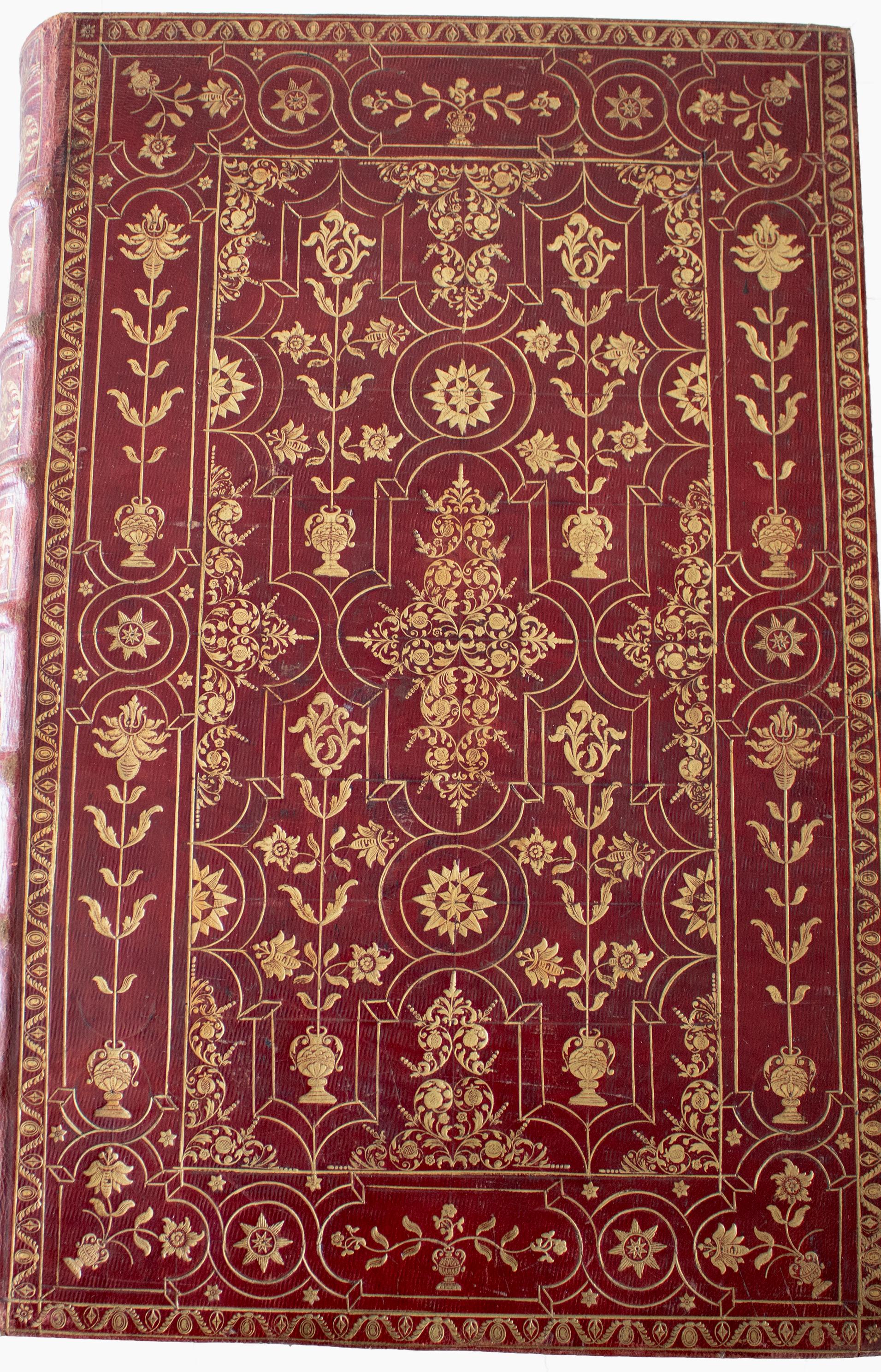
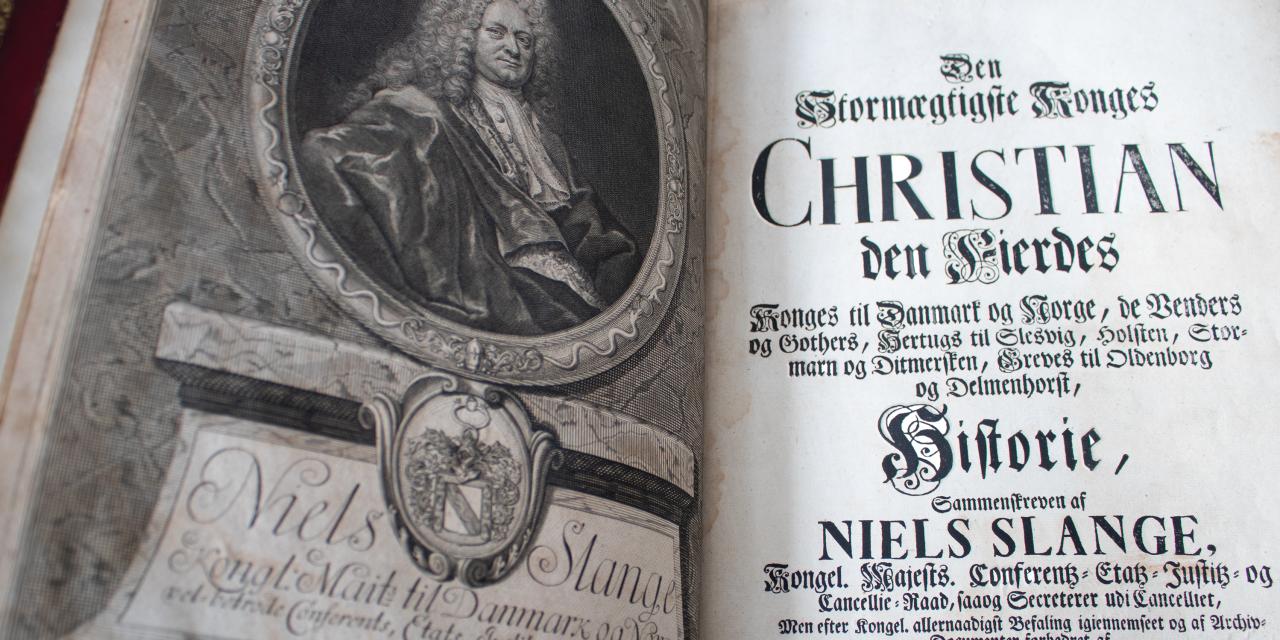
Royal Danish Library has acquired a beautiful full-leather binding in red morocco leather. In its composition, the binding recalls a famous masterpiece created by the Copenhagen bookbinder Niels Anthon (1761–1829), dated 1784 and now held in Oslo. For this reason, the binding has been attributed to Niels Anthon or his workshop. More likely, however, it is a masterpiece produced using the same materials and tools that Anthon employed for his own masterwork.
The volume features lavish gilt decoration on the spine and covers, gilt inner borders, and gilt edges on all sides. It contains Den historie om Christian den Fjerde by Niels Slange, completed by the historian Hans Gram and published in 1749. The work has on several occasions been used by bookbinders as a masterpiece submission.
A masterpiece was a test piece that a journeyman craftsman had to complete in order to qualify as a master. The bookbinders’ guild regulations from 1685 stated that:
Naar nogen Bogbinder skal i Lauget antagis, da skal hand først giøre sit Mesterstycke, som skal være at indbinde een stor Bibel eller anden god Bog af hvad Materie hand self vil in Folio paa Median Papiir, forgylt glat paa Bladene, i rød Saffian, ren oc næt ofver alt forgylt paa Lædderit, med krum Stempel oc med fuldkommen Beslag. 2. Een god Bog in Qvarto, Octavo eller Duodecimo forgylt paa Bladene, vel slagen oc paa ziirligste og beste Maade udi marbrered Bind indbunden.
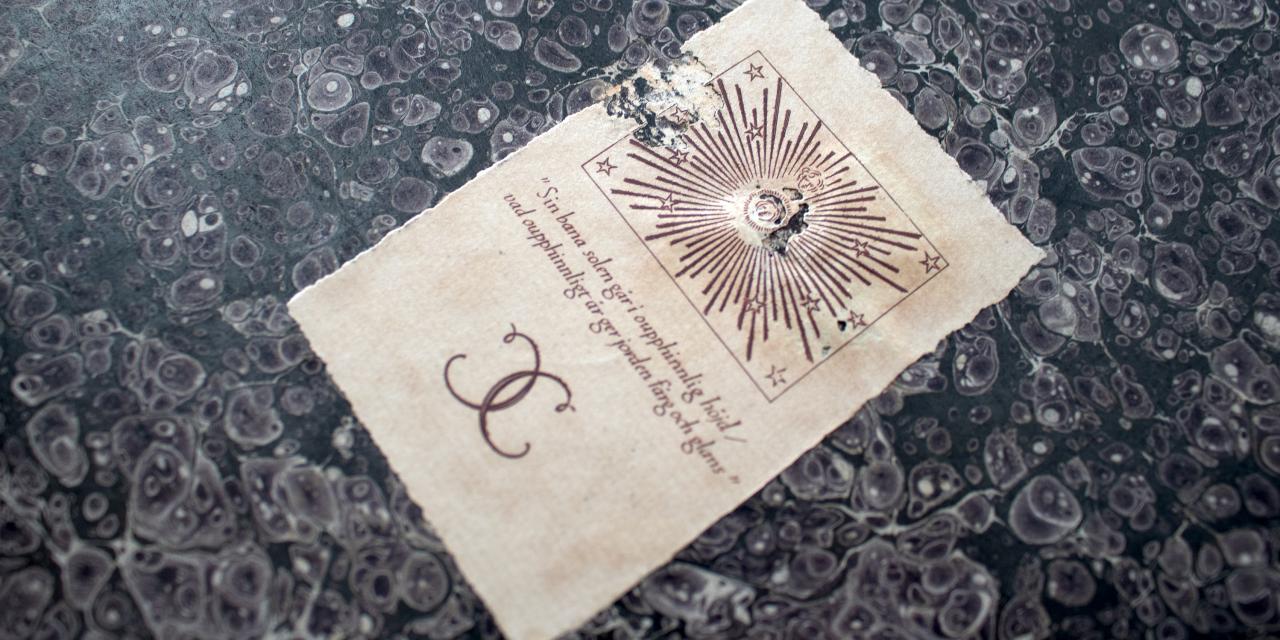
The book previously belonged to the Coyet family at Torup Castle. An ex libris bookplate has been pasted onto the endpaper, which is made of marbled paper dating from the early nineteenth century. Between the illustration and a mirrored monogram appear two lines from a poem by Viktor Rydberg (1828–1895): “Sin bana solen går i oupphinnlig höjd / vad oupphinnligt är ger jorden färg och glans.”
Hotel Pro Forma and the Archive of Billedstofteatret
A central archive for Danish performance history, containing visual scores and documentation from groundbreaking performing arts productions.
Hotel Pro Forma (1985–) was founded by Kirsten Dehlholm (1945–2024), who led the company until her death. Nationally and internationally, the theatre has been pioneering in its artistic language, using visual art as a guiding principle for its overall aesthetic expression. This is reflected in the archive through the preserved visual scores created for the productions. Kirsten Dehlholm received numerous Danish and international awards for her work. She achieved her breakthrough with the performance Operation: Orfeo in 1993. Before founding Hotel Pro Forma, Dehlholm was co-director of Billedstofteatret (1977–1985), whose archive has also been acquired by Royal Danish Library. Both groups expanded the boundaries of the performing arts, including by incorporating museum spaces such as Ny Carlsberg Glyptotek and later ARKEN Museum of Contemporary Art.
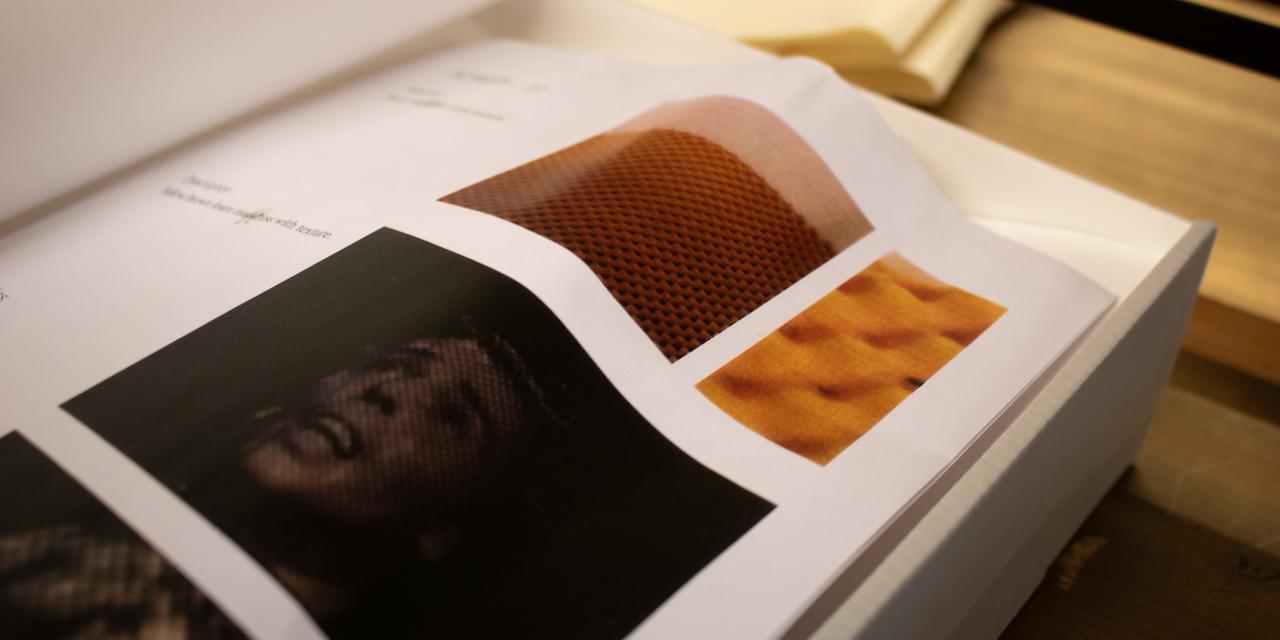
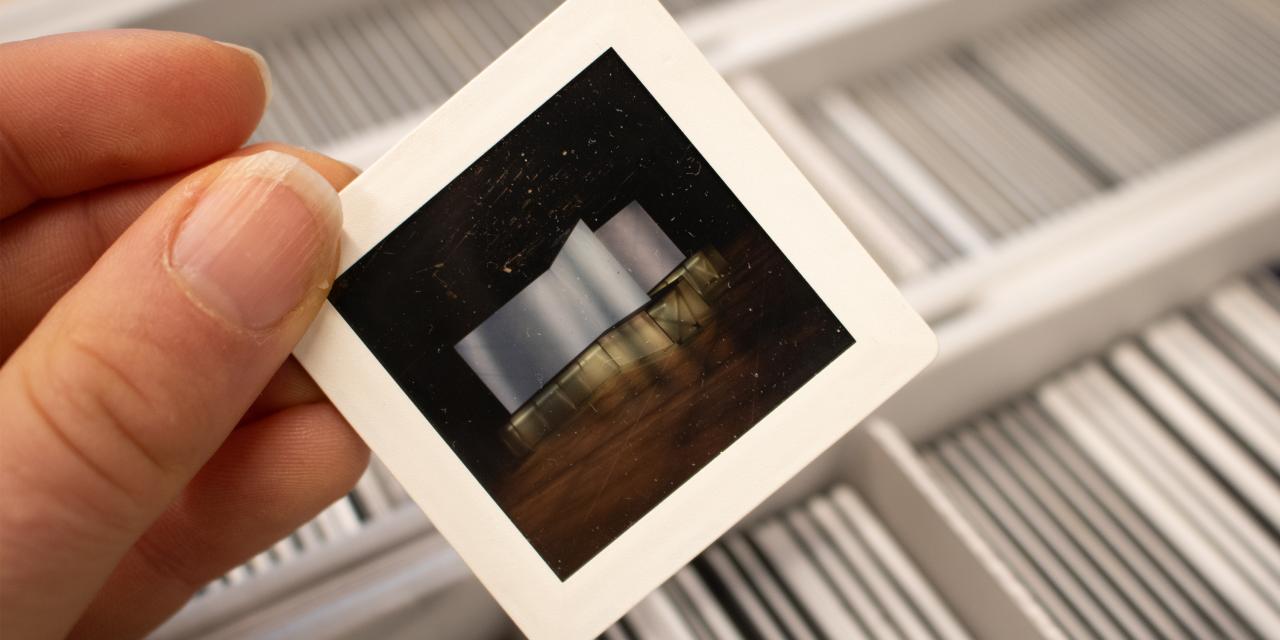
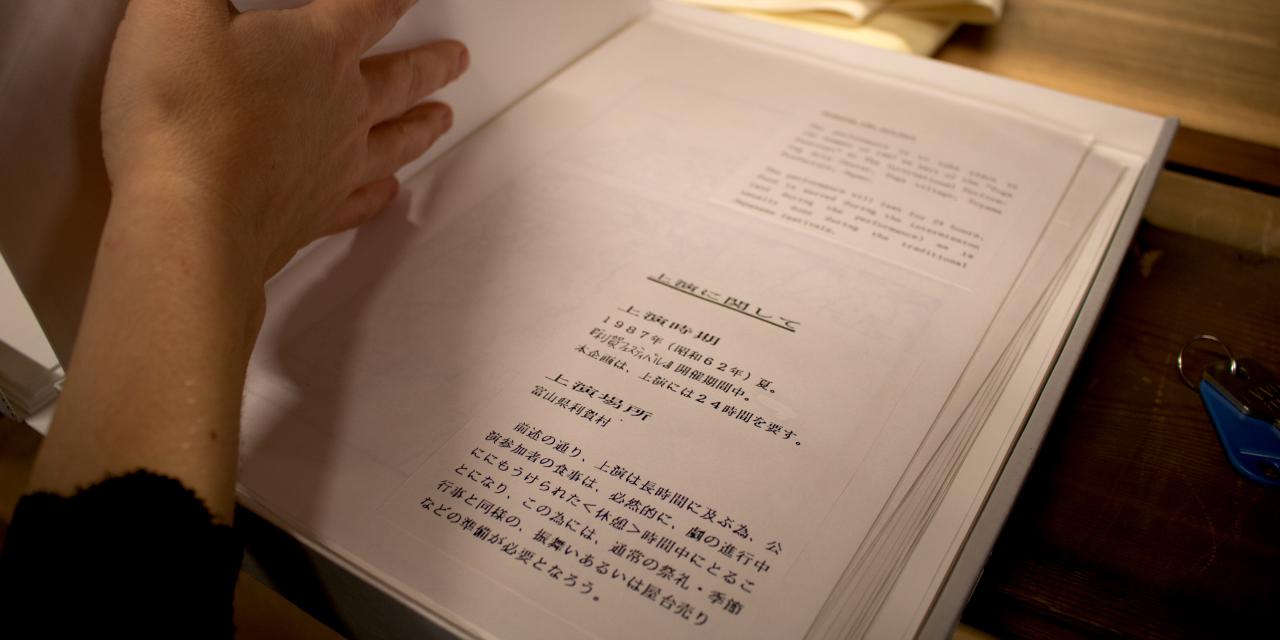
Between 2019 and 2022, a research project on documentation practices in the performing arts was carried out at The Royal Danish Library. One of the resulting research articles, "I only store what I can't remember" by A. Lawaetz, explores, among other subjects, Kirsten Dehlholm’s documentation practices.
The archive complements holdings such as the archive of Catherine Poher, also preserved at Royal Danish Library and likewise connected to Billedstofteatret, as well as the video collection of Copenhagen International Theatre, which also contains documentation of performance art.
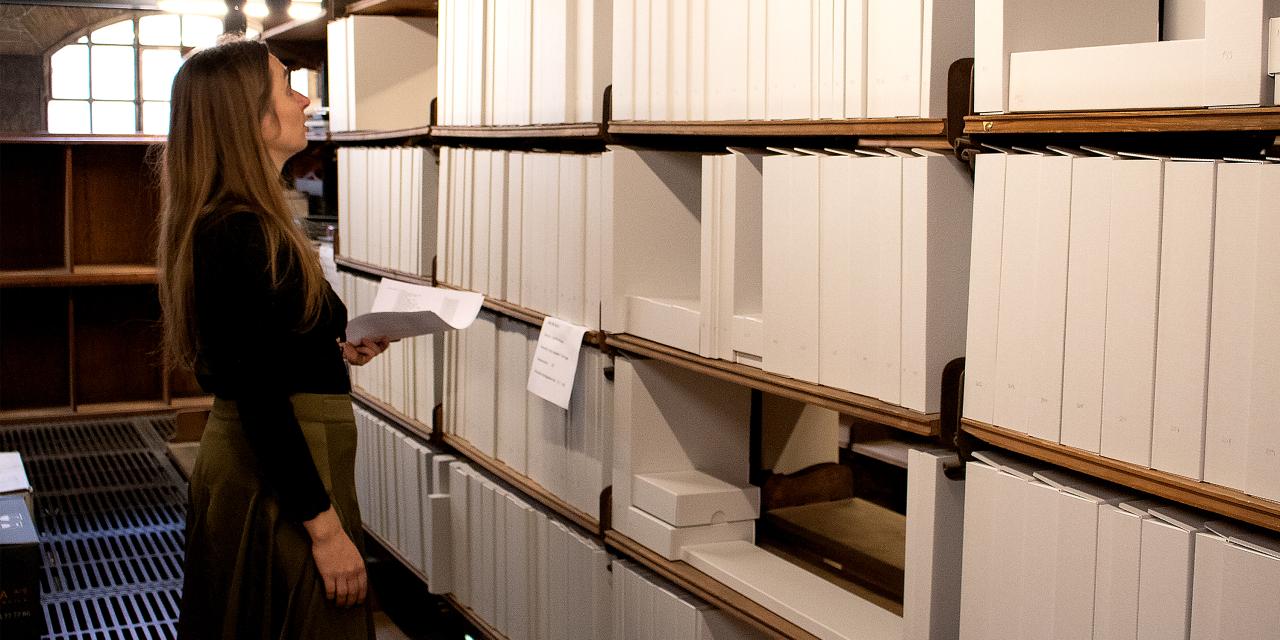
The archive is an important addition to the history of Danish performance art and is expected to be fully processed in 2026.
Hanne Roemer
Sheet music and archival material from a pioneer of the women’s music movement and an important figure in the Danish jazz and big band scene.
In 2025, the music collection at Royal Danish Library received a donation of material from the composer and musician Hanne Rømer (born 1949), who has established herself across several genres and was notably a pioneer of the women’s music movement in the mid-1970s.
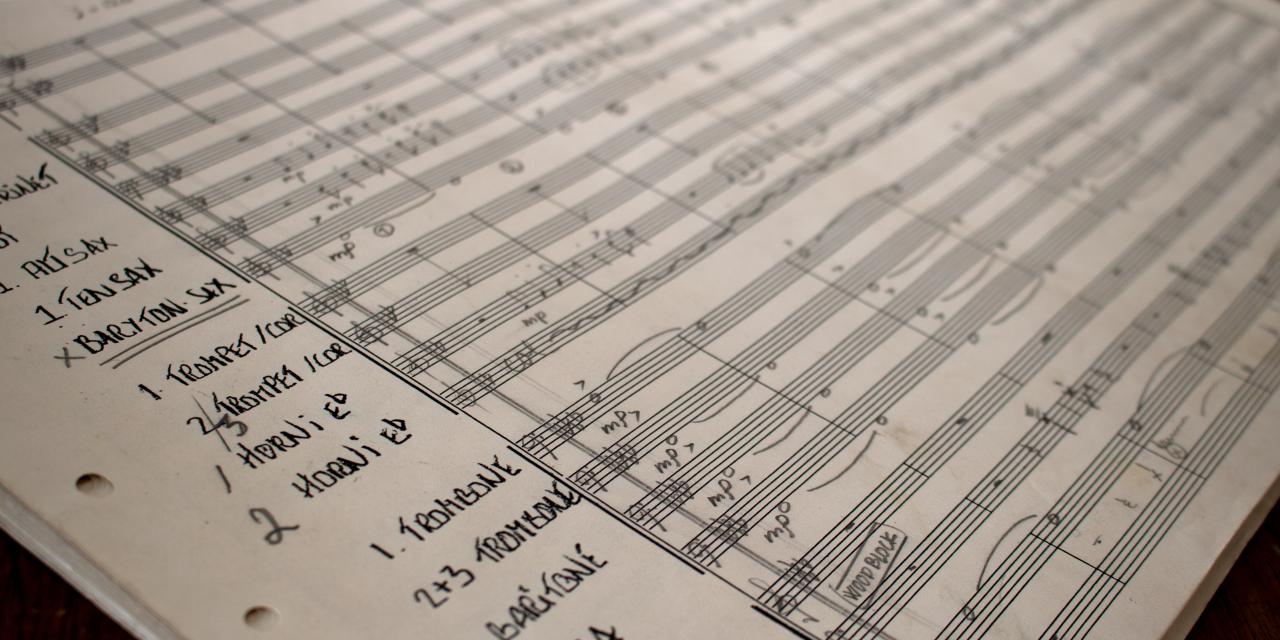
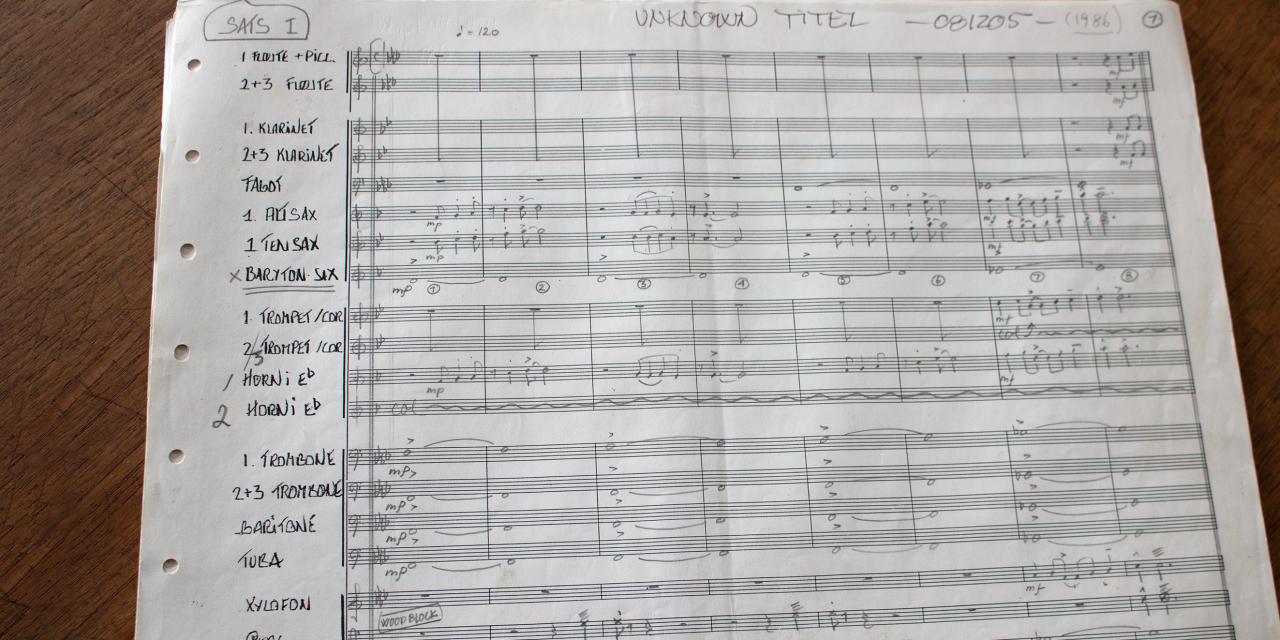
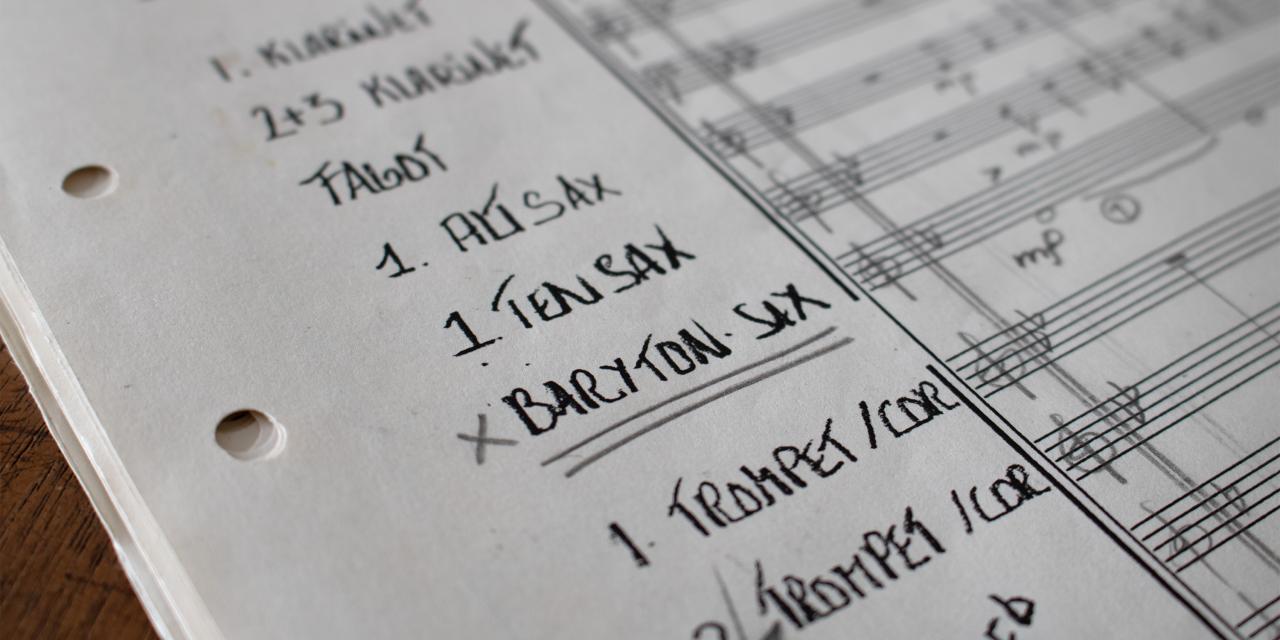
Hanne Rømer has been described as a colourful all-rounder who, as both musician and composer, has drawn inspiration from classical music as well as jazz and rock. She plays the saxophone and guitar and has, for several decades, led big bands, choirs, and orchestras. She has also worked as a teacher and founded her own music publishing company, Amanda Music, which publishes music intended for educational use. As a musician, she made her debut in 1975 with the all-female band Hos Anna, and in 1978 she founded Hexehyl Bigband. She composed music for both ensembles, and her works for the latter are particularly experimental in character.
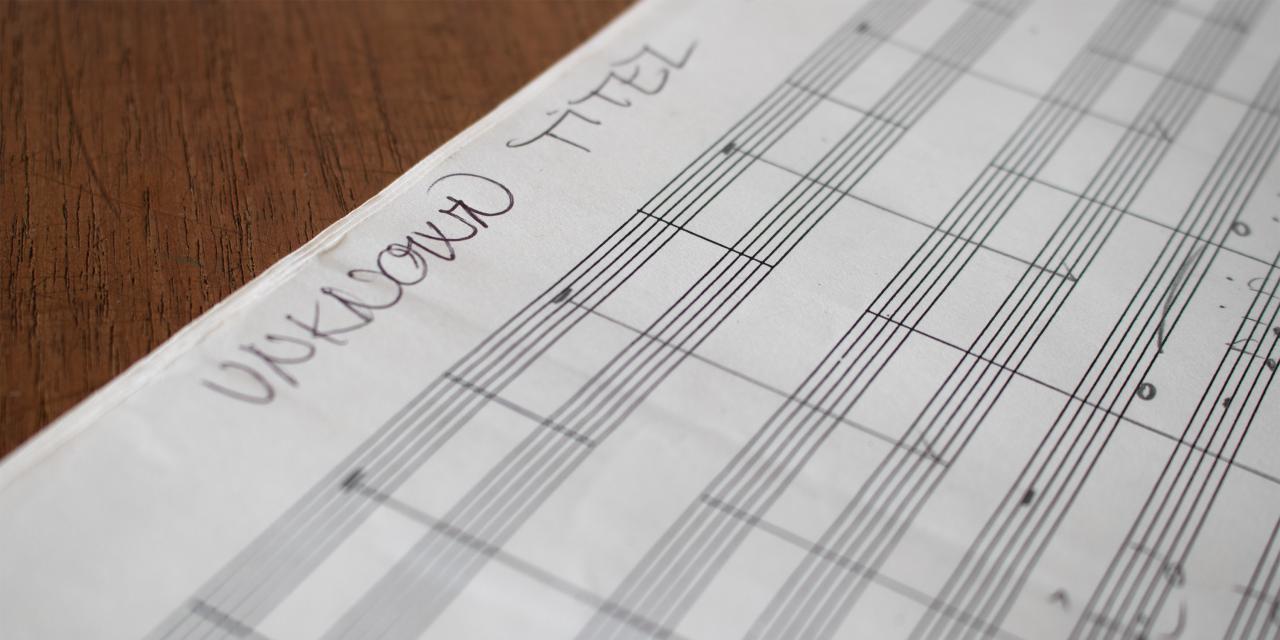
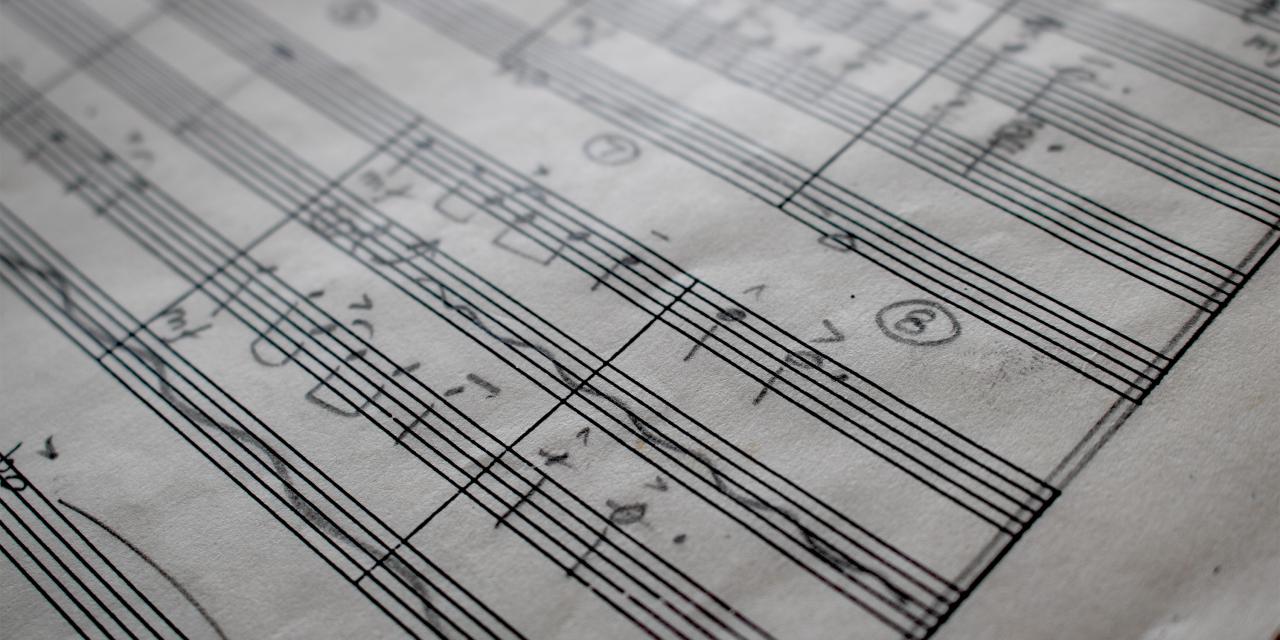
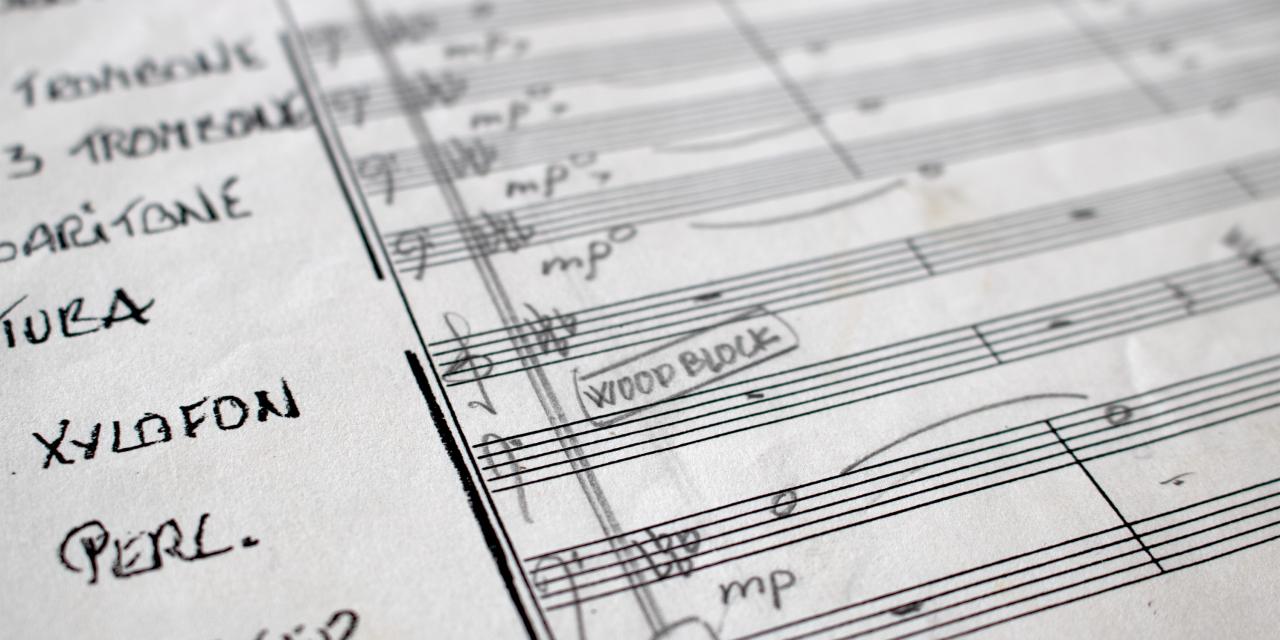
The material dates from the 1970s onwards and consists of handwritten scores, instrumental parts in some cases, and computer-printed notation. The scores reflect Rømer’s wide-ranging output, including both big band arrangements and shorter songs, some featuring lyrics by Ib Michael. Among the larger works are Rømer’s three-movement saxophone concerto, composed in 1986 for the Danish Radio Concert Orchestra and tenor saxophonist Morten Carlsen, a guitar concerto (1996), and works composed for Hexehyl Bigband.
In addition to the sheet music, the archive contains other materials, including a scrapbook with photographs from Hexehyl Bigband’s performance at Rådhuspladsen in 1979, as well as archival material relating to the Nordic female big band April Light, which Rømer led from 1994 onwards.
Fragment of Boëthius de Dacia
A rare medieval fragment by one of Denmark’s most important philosophers offers new insight into 13th-century thought.
Royal Danish Library has acquired a rare medieval fragment of the work "De modis significandi" by Boëthius de Dacia. Known in Danish as Bo Danmark, he was perhaps the most significant Danish philosopher before Søren Kierkegaard. The new acquisition therefore provides a rare glimpse into the intellectual life of the Middle Ages.
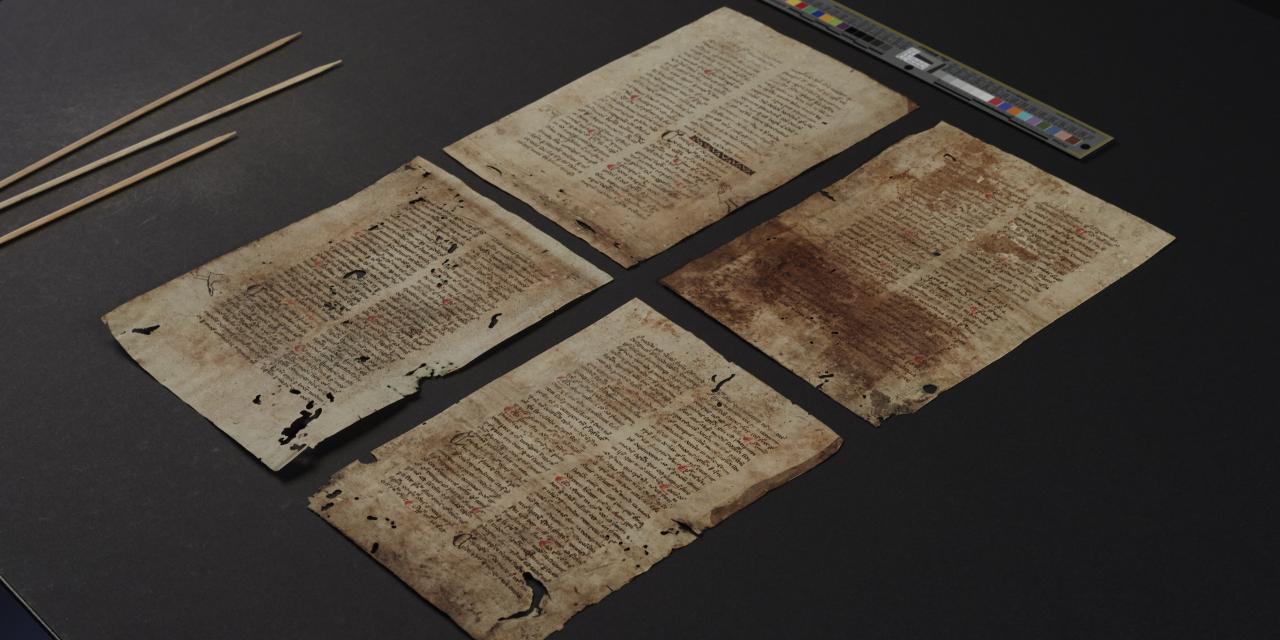
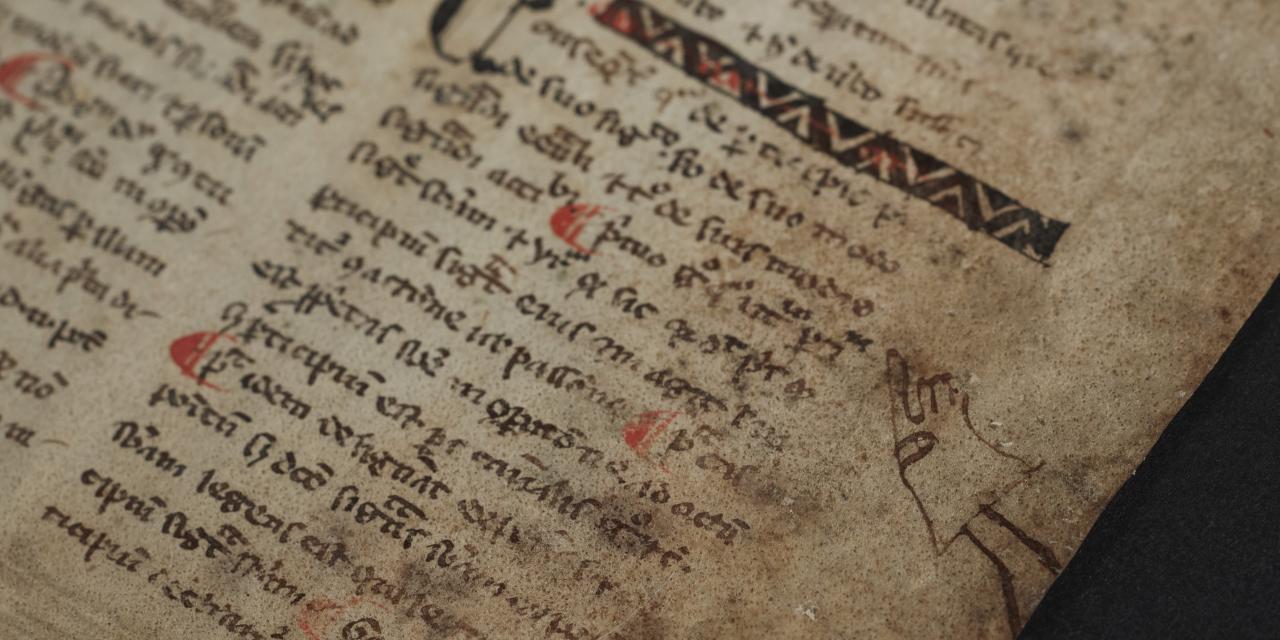
Although very little is known about Boethius de Dacia, he remains one of the most important Danish thinkers of the medieval period. He taught at the University of Paris in the 1270s and attracted such attention that many of his ideas were included on a list of prohibited doctrines issued by the Bishop of Paris in 1277.
Fragment of Boëthius de Dacia's "De modis significandi"
Shortly afterwards, he disappears without trace from the historical record.
Now Royal Danish Library – with support from Augustinus Foundation – has acquired a fragment of "De modis significandi", a work on medieval theories of language. Presumably, this is the first time that a manuscript by Boethius de Dacia has found its way to Denmark.
Kruse Aerial photo
More than 500,000 aerial photographs from 1992–2025 document the modern Danish landscape and complement the library’s historical collections.
In 2025, The Royal Danish Library’s aerial photography collection acquired the image archive of Kruse Aerial Photo. The extensive archive contains more than 500,000 unique colour images in the form of so-called oblique aerial photographs of farms and buildings, taken between 1992 and 2025. Kruse Aerial Photo is part of the Danish tradition of photographing farms and buildings from the air, a practice that originated in the 1930s. The archive currently consists of proof prints and associated negatives, as well as digital images from both before and after 2004. The archive is an important addition to Royal Danish Library’s aerial photography collection, as the other archives of oblique aerial photographs primarily focus on the period from 1930 to 1960 and contain very few images taken after 1992.
Kruse Aerial Photo's archive therefore documents the development of the Danish landscape during a period not covered by other collections. The archive includes photographs from most parts of the country, though with a particular focus on Jutland, where the company is based. Even though the majority of the images are from Jutland, there is still a good chance of finding photographs from your own local area in the collection.
Royal Danish Library's digital aerial photo archive, "An Aerial View of Denmark"
Once the archive has been catalogued, the plan is to make it available through Royal Danish Library’s aerial photography porta"An Aerial View of Denmark. The portal is already widely used by genealogists, local historians, the media, public authorities, and private consultancy firms, and the archive will actively contribute to new knowledge about the development of the Danish landscape after 1992.