
The Life of Hans Christian Andersen
Hans Christian Andersen kept manuscripts, letters, almanacs, diaries and also wrote about his own life in several autobiographies. You can read about them all here.
My life is a beautiful fairy tale, so rich and blissful!
Hans Christian Andersen's life and authorship are closely linked. His childhood in poor conditions in Odense and his unusual course of life became an important part of his authoring and his own story about himself.
Andersen wanted to become famous from an early age. Throughout his life, he kept his manuscripts, letters, diaries, almanacs, and literary drafts. He gave some of the manuscripts and picture books to the families he visited.
Travel, friendships, love affairs and the path from a poor boy to a internationally recognised author became part of the life, he himself called a a fairy tale.
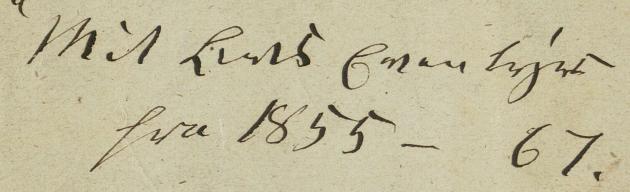
Photo: H. C. Andersen (1805-1875)

Photo: Frederik Ferdinand Petersen (1815-1898)
His Childhood in Odense
Hans Christian Andersen was born in Odense on 2 April 1805, and grew up under very modest circumstances. His father, Hans Andersen, was a cobbler, and his mother, Anne Marie Andersdatter, was a washerwoman.
His schooling mainly took place in Odense's charity school. The childhood environment of the town's street life, legends and encounters with the poorest of society made a deep impression on his later authorship. The experiences from his childhood later found their way into several of his works, including the novels O.T. (1836) and Only a Fiddler (1837) and the fairy tale The Little Match Girl (1845).
Despite poverty, his home was characterised by books, stories and imagination. His father read aloud Holberg's comedies, One Thousand and One Nights and much more. Hans Christian also heard folk tales from the wives at the poorhouse. The theater also became very important: He went to performances in Odense and got supernumerary parts at the Royal Danish Theater's guest performances. In combination with the cultural environment around Christian Henrik Iversen, the Hanck family, Marie Bunkeflod and Colonel Christian Høegh-Guldberg, it strengthened his artistic dreams.
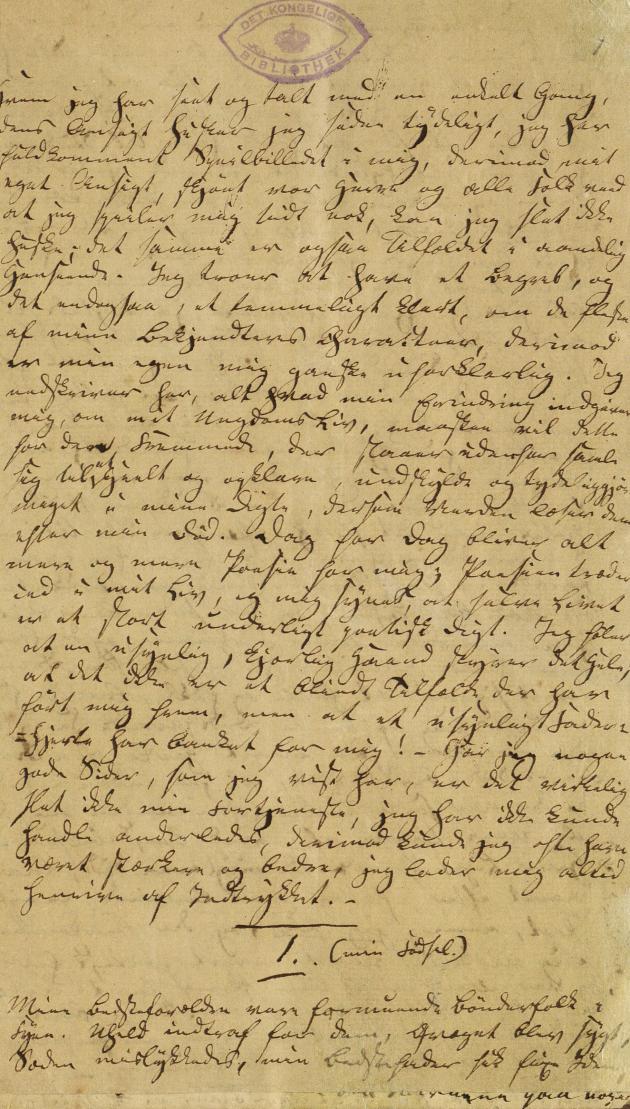
Photo: H. C. Andersen (1805-1875)
Life in Copenhagen
In September 1819, at the age of 14, HC Andersen traveled from Odense to Copenhagen with the dream of becoming an actor, singer or ballet dancer at the Royal Danish Theatre. It did not work out. The first years in the capital city were characterised by adversity and difficult financial circumstances. His encounter with the world of theatre and the people who supported him, however, proved crucial to his further development.
In Copenhagen, he came into contact with, among others, the choirmaster of the Royal Danish Theatre called Giuseppe Siboni, the composer C.E.F. Weyse, Professor Frederik Høegh-Guldberg, Kamma Rahbek at Bakkehuset, the Wulff family and the Collin family, all of whom were part of the city's cultural elite at the time. Their support enabled him to attend school at the state's expense. His academic years at grammar school in Slagelse and Helsingør were difficult, but in 1828, he passed his high school graduation and his literary career began to really take off. He lived the rest of his life in Copenhagen.
The First Books
In 1827, Hans Christian Andersen had his first poems published in Johan Ludvig Heiberg's journal, Kjøbenhavns flyvende Post. His proper literary debut came with A Walking Tour from Holmen Canal to the Eastern Tip of Amager in 1828 and 1829 (1829), which was a success and showed his unique blend of imagination, humor and storytelling. The following year he published Poems.
Financial problems led to Hans Christian Andersen sending a job application to His Majesty's Library, Royal Danish Library, on 27 November 1834. The application was accompanied by recommendations from H.C. Ørsted and Jonas Collin. Royal Danish Library rejected the application on the grounds that his talent went further than the trivial work of the library. You can read more about the application here (in Danish). From 1838 onwards, Andersen received an annual grant from the state as a writer.

Photo: H. C. Andersen (1805-1875)
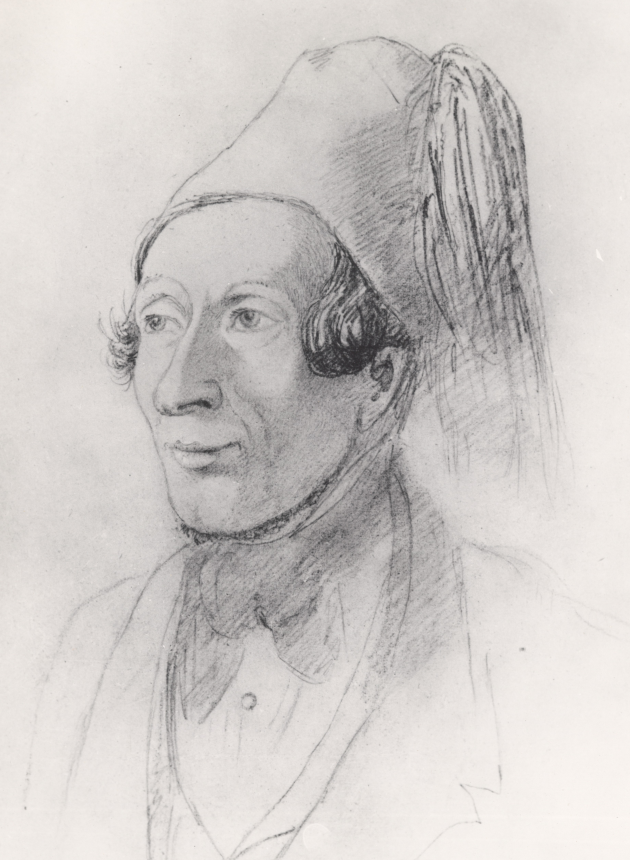
Photo: formentlig Christian Hansen
"To travel is to Live"
Travel became a crucial source of inspiration for Hans Christian Andersen's writing. His great European journey in 1833-34 which took him through Germany, France, Switzerland and Italy, was a particularly important turning point. His encounter with Italy inspired the novel The Improvisatore (1835). The book marked his breakthrough as a novelist.
To travel is to live.
Hans Christian Andersen wrote "To travel is life" in a song in 1842, and in 1855, he expressed the same idea in the famous sentence: "To travel is to live." Hans Christian Andersen traveled to large parts of Europe, Morocco, and the Ottoman Empire. On his travels, he collected impressions of people, landscapes, and cultures in his diaries and almanacs. The experiences from his travels found their ways into his books and stories.
He also wrote travel books such as Shadow Pictures of a Journey to the Harz Mountains and Saxon Switzerland (1831), A Poet's Bazaar (1842), In Sweden (1851), In Spain (1863) and A Visit to Portugal in 1866 (1868).

Photo: H. C. Andersen (1805-1875)
The adventures
In 1835, the first booklets of Fairy Tales Told for Children were published. Hans Christian Andersen had previously worked with the fairy-tale form, but it was here that his distinctive storytelling style truly took shape. Combining fantasy, humour and seriousness, he created stories that spoke to both children and adults.

Photo: H. C. Andersen (1805-1875)
Fairy tales like The Tinderbox, The Little Mermaid, Thumbelina, The Swineherd, The Princess and the Pea, The Emperor's New Clothes, Clumsy Hans, The Ugly Duckling and The Shepherdess and the Chimney Sweep became known throughout the world. Many of the fairy tales are preserved in drafts and manuscripts at Royal Danish Library, which show his work process from first idea to finished story.
Find drafts and manuscripts for the adventures drafts and manuscripts for the adventures here drafts and manuscripts for the adventures here.
A writer with many pages
Although fairy tales were considered his greatest success, Hans Christian Andersen wrote in many genres. He published novels, poems, plays, and travelouges, and also worked with paper cutouts, picture books, and drawings.
His works include the novels O.T. (1836), Only a Fiddler (1837) and The Two Baronesses (1848), as well as the dramas Agnete and the Merman (1833), The Mulatto (1840) and Little Kirsten (1846). The theatre remained an important part of his life.

Photo: H. C. Andersen (1805-1875)

Photo: Hansen, Schou & Weller
The Life Behind the Writing
Hans Christian Andersen had several strong emotional connections and fell in love varius times throughout his life. In 1830, he met Riborg Voigt in Faaborg, who made a deep impression on him - however, she was already engaged. Later, he fell in love with, among others, Louise Collin, Sophie Ørsted, the Swedish Countess Matilda Bark and the Swedish opera singer Jenny Lind, who only reciprocated his feelings with friendship,
Hans Christian Andersen's letters and diaries also reveal strong emotional bonds with and admiration for men such as Edvard Collin and Henrik Stampe. Andersen wrote about his own life on several occations in The Book of Life (1832), Das Märchen meines Lebens ohne Dichtung (1847) and especially The Fairy Tale of My Life (1855), where he told of people he met, his loves and the path from a difficult beginning to international recognition.
The Last Years and Legacy of Hans Christian Andersen
In his later years, Hans Christian Andersen continued to write, including The Will-o'-the-Wisps Are in the Town, Said the Bog-Woman (1865), What One Can Think Up and Lucky Peer (both 1870), as well as The Flea and the Professor and Aunty Toothache (both 1872). Hans Christian Andersen's last years were marked by failing health. He died on 4 August 1875 and was buried in Assistens Kirkegård in the Nørrebro area of Copenhagen.
As a child, Andersen already wanted to be famous. Throughout his life, he kept his manuscripts, letters, diaries, almanacs and literary drafts. He also gave many manuscripts and picture books to the families he visited. It was important to Hans Christian Andersen that his manuscripts and other works were acquired by Royal Danish Library, and as early as 1860 he bequeathed his large album to the library. He left the administration of his estate to the Collin and Moritz Melchior families. Today, the majority of his surviving materials can be found in Royal Danish Library's collections, including the Collins Collection, which was donated by Jonas Collin to the library in 1905.
Hans Christian Andersen in outline
- 1805: Born in Odense
- 1819: Travels to Copenhagen at the age of 14
- 1819-22: Tries to make a name for himself as a ballet dancer, singer and actor without success
- 1822–28: Grammar school in Slagelse and Helsingør and high school diploma in Copenhagen
- 1822: Published Youthful Attempts under a pseudonym
- 1827: First poems published
- 1829: Proper book debut with A Walking Tour from Holmen Canal to the Eastern Tip of Amager
- 1829: Debut as a playwright at the Royal Danish Theatre
- 1830: First printed prose fairy tale, The Dead Man, in Poems
- 1835: Publishes first booklet of Fairy Tales Told for Children and first novel The Improvisatore
- 1875: Died in Copenhagen
- 1875: Royal Danish Library receives Hans Christian Andersen's album and books with inscriptions as a testamentary gift
- 1905: The Collins Collection is donated to Royal Danish Library
- 1954: Royal Danish Library receives Holger Laage-Petersen's Hans Christian Andersen collection.
- 1969: Royal Danish Library receives Arne Portman's Hans Christian Andersen collection as a gift - thanks to a donation from A.P. Møller and HustruChastine Mc-Kinney Møller's Foundation for General Purposes
- 1997: Hans Christian Andersen's manuscripts and letters are included in UNESCO's Memory of the World Register

Photo: Henrik Tilemann (1835-1923)
Go exploring
In 2025-2027 we will digitise all of Hans Christian Andersen's manuscripts and letters. You can explore Royal Danish Library's digital collections online and see how far we have come.