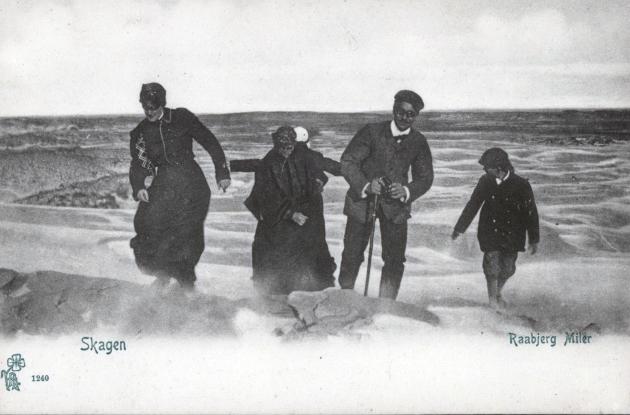
Denmark in postcards
With the digitised collection of topographical postcards, you can explore a special part of Danish cultural history. Postcards are not just postcards – they are a journey through Denmark's history.
The beginning of the postcard
At a time when the last of Denmark's red mailboxes are being removed from the streetscape, it can be difficult to imagine the vast amount of letters and postcards that were sent before email and the internet made their arrival in the 1990s. But almost a hundred years earlier, a small revolution also took place in the way Danes communicated with each other in writing. Namely in the form of the postcard.
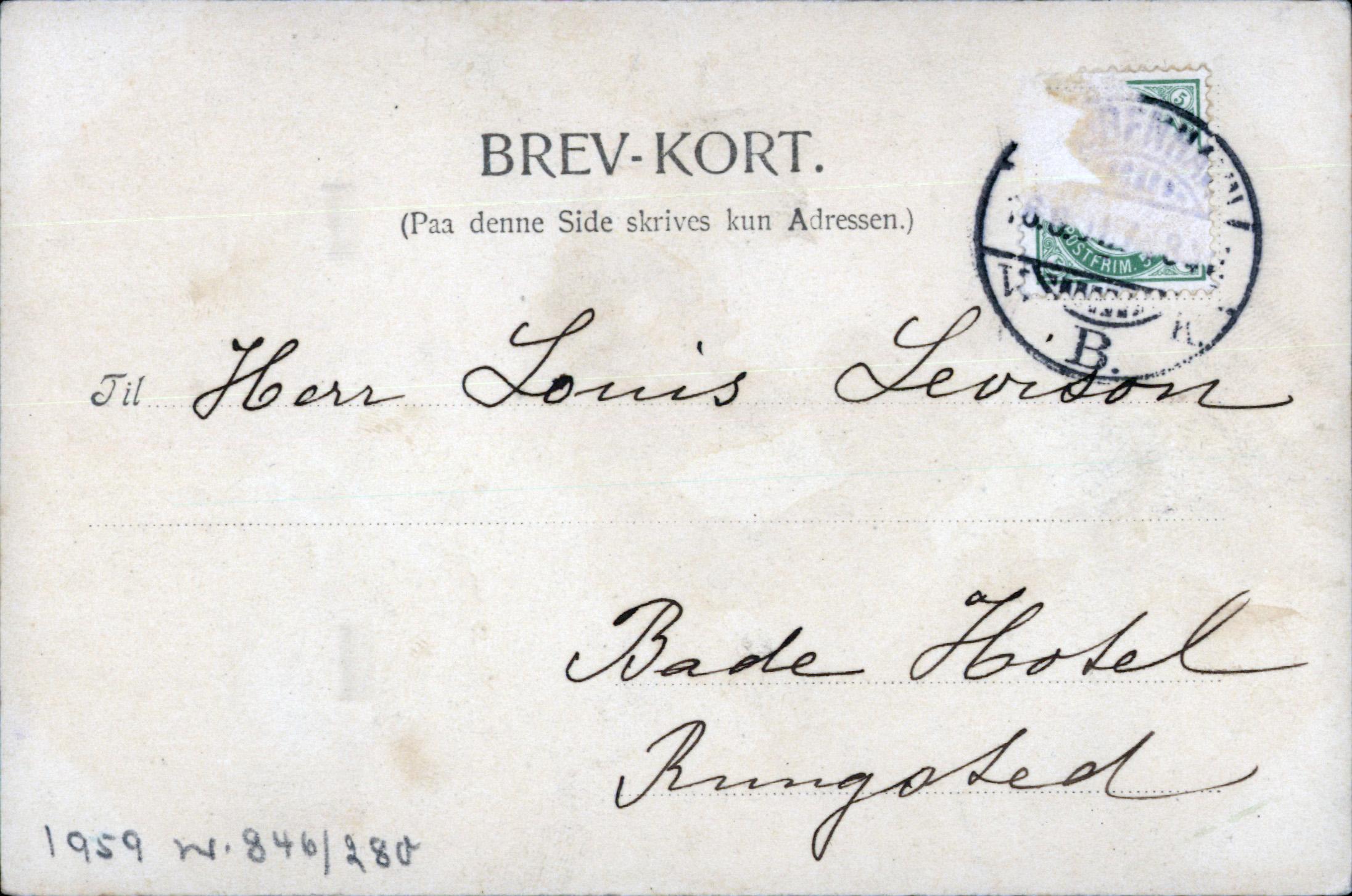

The use of “letter cards”, as postcards were initially known, began in the 1870s. Their open and simple format made them an effective way of communicating short messages. Soon, many postcards were adorned with printed illustrations and were primarily used for short birthday greetings, expressions of thanks, and advertisements that could be sent quickly and easily.
Around 1900, however, a shift occurred. Increasingly, people began using postcards to send longer greetings and updates on their well-being, and postcards were also used more frequently to make arrangements. Postage for postcards was cheaper than for letters, and the many daily postal deliveries meant that an arrangement could be proposed and confirmed by postcard on the very same day.
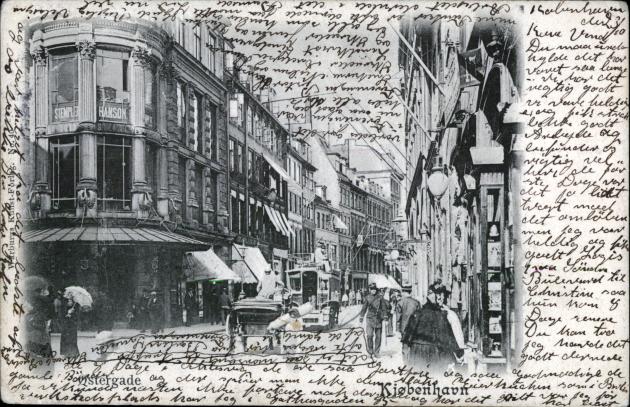
Photo: Johan Otto Warburg (1877-1936), forlægger.
The motifs of postcards also changed during this period. The first postcards with photographic motifs appeared as early as the 1880s. However, as cameras became more widespread around the turn of the century, there was an explosion in the number of photographic postcards.
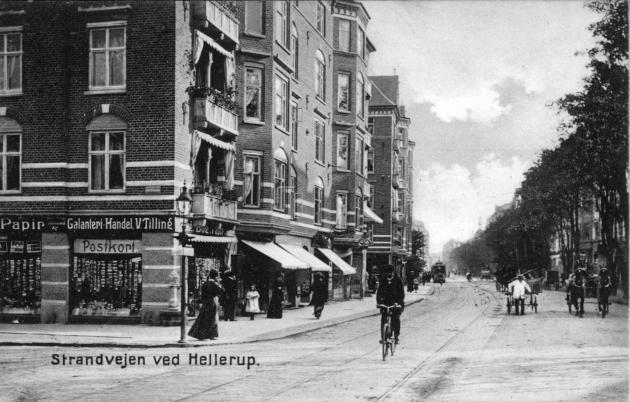
Photo: Carl Stenders Kunstforlag.
Topographical postcards, particularly those depicting landscapes, towns, and buildings, were especially popular. Publishers, printers, local booksellers, as well as private and travelling photographers, produced postcards in great numbers. Within just a few years, there was hardly a corner of Denmark that could not be found depicted on a postcard.
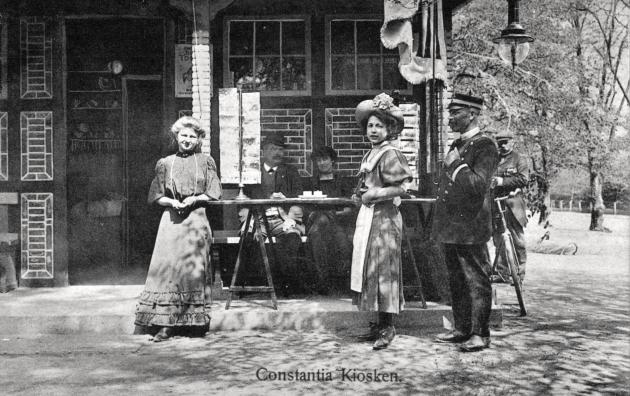
Photo: Konstantia Kiosken.
With the new Postal Act of 1 June 1905, postcards once again changed in appearance and character. Previously, only the recipient’s name and address were permitted on the back, but space was now made for longer messages. This meant that illustrations and photographs could occupy the entire front. The change can be seen in both postcards from Strandvejen. They were most likely produced in the years immediately after the 1905 Postal Act came into force. Note the fine selection of postcards available in the shops.
The postcard collection
You can explore the postcard collection yourself in the Royal Danish Library’s digital collections:
The popularity of postcards continued to grow until 1919/1920. In Denmark alone, no fewer than 41.8 million postcards were sent domestically and abroad that year. By 1920/1921, this figure had fallen to “only” 32.9 million. Although postcards remained popular, usage declined in the decades that followed, and by 1990 the number had dropped to 18.7 million.
Several factors may have contributed to this development. For example, the spread of the telephone from the 1920s onwards made it possible to send short messages and make arrangements more quickly than with postcards. In addition, the increasing availability of cameras for private use may have meant that it was no longer as appealing to buy postcards showing places one had visited on holiday. With a personal camera, people could take their own photographs and show them to family and friends at home.
Look below to explore a selection of topics that examine the postcard as a historical source.
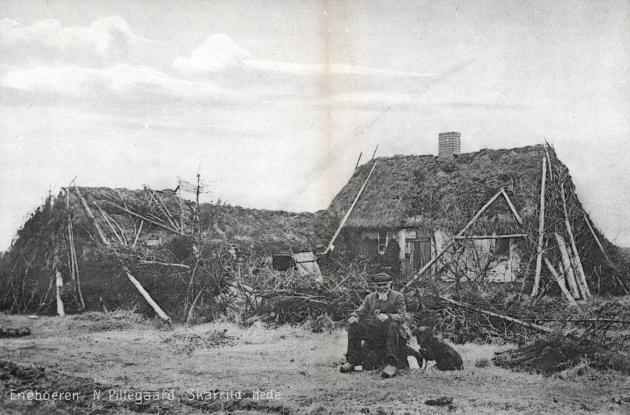
Postcard photographs as a historical source
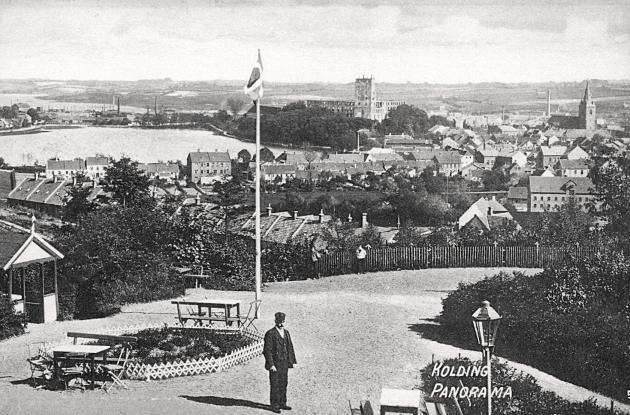
The City of Kolding
Danish postcards in the Polish intelligence service
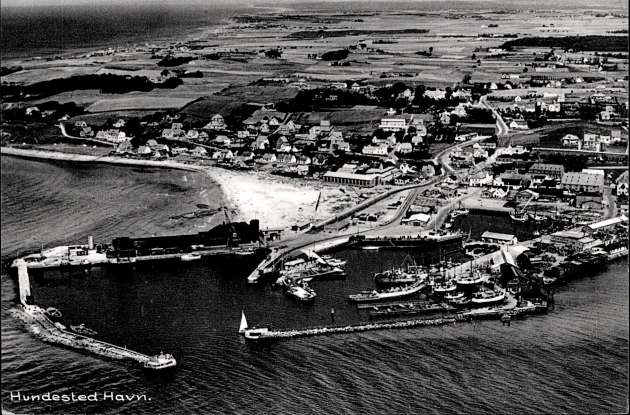
Royal Danish Library's postcard collection
It is not known when the topographical postcard collection was established, but the photographic collection can be dated to 1902.
The topographical postcard collection consists of approximately 310,000 mandatory deposit, purchased, or donated postcards featuring either photographic or illustrated motifs. The postcards mainly cover the period from around 1905 to 1950, although both earlier and more recent postcards are also included.
The photographers are often unknown – in such cases, the publisher or bookseller is typically listed as the creator. The postcards are dated based on the printer’s, publisher’s, or the Royal Danish Library’s stamp, the sender’s dating, or the postmark. For this reason, dates are given as approximate.
Please note whether a postcard is free of copyright if you wish to use it for anything other than private purposes.