The Faces of Music: From harpsichord to concert grand piano – a journey through the development of the piano
ANNUAL PASS HOLDERS ONLY – Come into the music's engine room with the faces of music.
What did Bach's Fugues originally sound like? What sound did Mozart have in his ears when he wrote his Fantasy in C minor? And why would Chopin's piano sound hardly have existed in the 1780s?
When Alexander Melnikov sets up five very different keyboard instruments in the Queen's Hall, he not only opens up a unique concert experience. He gives us a journey through the piano's own history and opens up a rare chance to hear the music as it might have actually sounded in the composers' own time.
In this lecture, Katrine Nyland Sørensen gives a lively introduction to the development of the piano from Bach to Schnittke - and to the instruments that Melnikov brings with him. The lecture provides an overview of the instruments' distinctive features, their sound and their significance, and prepares the audience to experience Alexander Melnikov's concert program Many Pianos with completely new ears.
Katrine Nyland Sørensen is a communicator, lecturer and podcast producer. After many years as a host and editor on DR P3, P2 and P1, she now runs her own communication agency, Sørensen Stories, with a focus on music, cultural history and science communication.
The faces of music
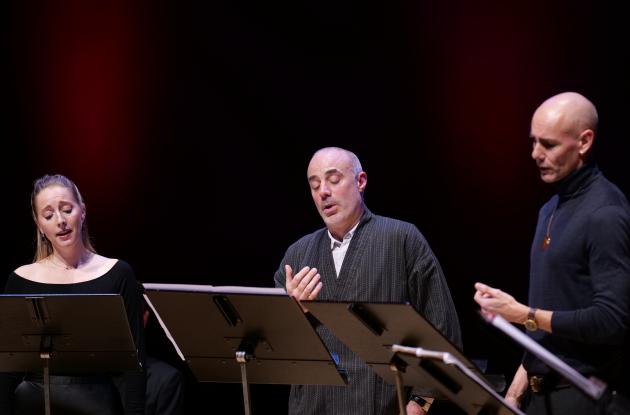
An incredible amount of work goes on before we, the audience, settle comfortably in the Queen's Hall's chairs to experience a piece of music. In no particular order – the musician must be trained, the music must be written and rehearsed, the instrument must be built, the program printed and so on. The faces of music go behind the music, and sets the stage for the Diamond Club to meet composers, musicians or researchers who will talk about the process before the music can sound for the audience's enjoyment.