New insights into the Cold War in Denmark
A new research project aims to provide a clearer picture of Denmark's role during the Cold War – a time period which can help us understand the current security policy situation better.
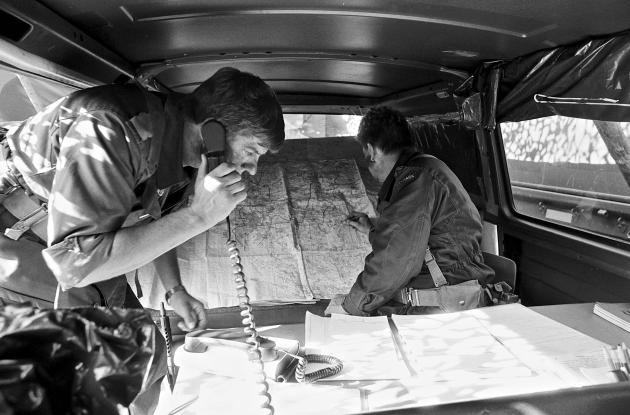
Photo: Forsvarsgalleriet
Published 16 January 2026 | Revision 20 January 2026
In a time of geopolitical tensions and war in Europe, rearmament has become a topical issue. In this context, it is relevant to look at the experiences from the Cold War and Denmark's preparations in this regard. Unfortunately, it is a period that is still characterized by many myths to this day. A new research project aims to change that.
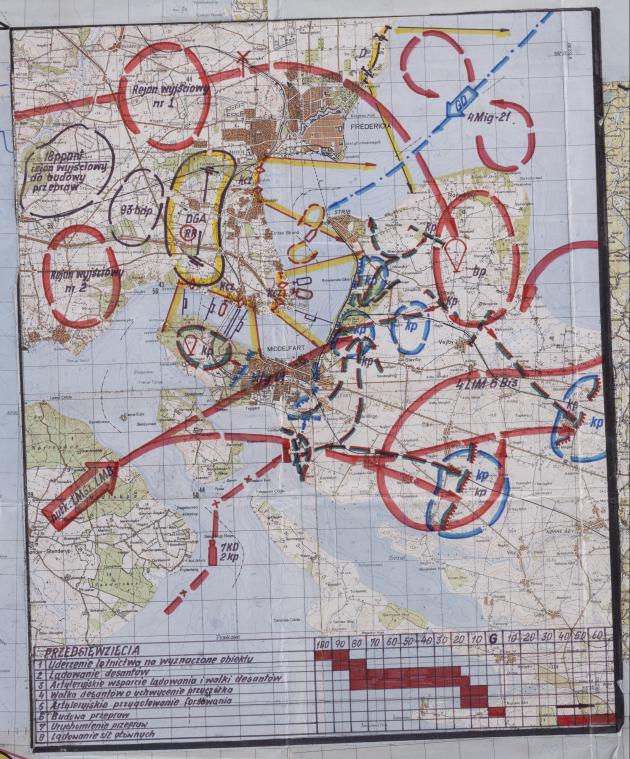
Photo: Det Militære Arkiv i Torun
With a grant of DKK 3.7 million from the Augustinus Foundation, researchers from Royal Danish Library, the Danish National Archives and Langelands Museum will investigate the war plans that were made, both in the East and the West, during the Cold War.
The research project will tackle some of the myths that exist about the Cold War: Were there plans for Denmark to be bombed with nuclear weapons? Did the Poles plan to make a landing in Køge Bay? Did the Warsaw Pact have a plan to use the towers of Danish village churches as sighting lines? And how would Denmark have coped if the enemy had realized his threats?
The goal is not only to strengthen research into the Cold War, but also to give Danes a better insight into a period which has unfortunately once again gained new relevance.
In an unstable time, when many decisions have to be made, it is important to have solid ground under our feet in the form of solid knowledge and experience. The Cold War is an important part of Denmark's recent experiences with crisis and conflict, and it is therefore crucial to dispel some of the myths that still exist to this day. A big thank you to the Augustinus Foundation for the wonderful grant, which gives us the opportunity to combine our strong collections with new research and modern methods - and make us all wiser about both the period and the time we live in today,
Background
- Royal Danish Library, together with the Danish National Archives and Langelands Museum, has received a grant of DKK 3.7 million from the Augustinus Foundation for the research project “Myths and realities – A geographical analysis of military plans for Denmark during the Cold War”, which will shed light on the specific military plans for Denmark during the Cold War. The research project is led by senior researcher at Royal Danish Library, Stig Svenningsen, and will run for three years.
- The project examines NATO and Warsaw Pact military plans for Denmark, focusing on maps and planning material from archives in Denmark, Germany and Poland. Using digital mapping tools, it analyses how the plans could have affected cities, infrastructure and population.
- The results of the research project will be disseminated widely over the next three years of the project through research articles and presentations, exhibitions and a popular science publication. Part of the dissemination will be done in collaboration with the Cold War Museum Langelandsfort and libraries around the country.
Presentation of the researchers
Stig Roar Svenningsen (Royal Danish Library) is a researcher in historical cartography and historical GIS. Stig has, among other things, researched the Soviet military mapping of Denmark and automated extraction of vector data from historical maps.
Steen Andersen (Danish National Archives) researches eastern and western military planning during the Cold War.
Anna Werenberg (Langeland Museum) has unique experience with archival studies in Polish military archives and translation of Polish military documents from the Cold War period.
Mads Perner (Roskilde University) conducts research in historical epidemiology and the use of digital methods in the humanities, including quantitative analyses of text and maps.