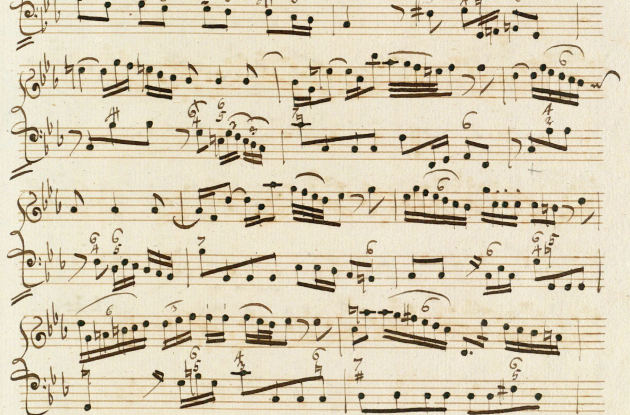
Hans Christian Lumbye: Telegraph Gallop (1844)
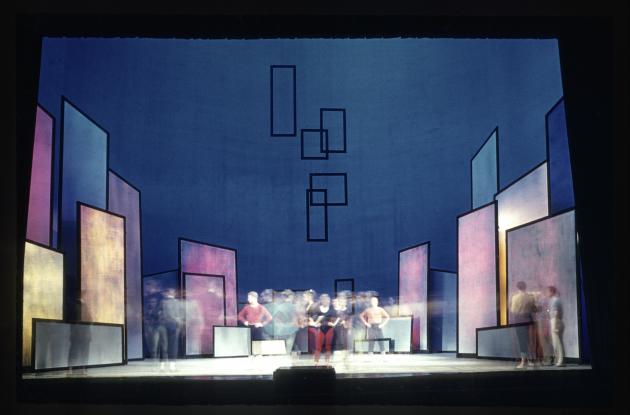
During the first years of Tivoli Garden’s history, allegiances in the music life of the amusement park were decidedly split between Lumbye’s orchestra (known as The Lumbye Society) and the First Brigade’s Brass Band under the direction of the regimental bandleader Henrik Braunstein (known as The Braunstein Brass Band). These two ensembles often appeared in the setting of a certain form of reciprocal musical rivalry. As a playful commentary on this musical competition, Lumbye composed his Telegraph Gallop, end-dated 10 May 1844, which was performed by both ensembles, playing simultaneously, albeit at opposite ends of the concert hall. With its intricate interactions going on between the two orchestral groups which, in a musical respect, are “telegraphing” various melodies to each other, the gallop has been conceived in a most refined and sophisticated fashion. At the outset, the “connection” between the two ensembles is somewhat indistinct because at the start of the piece, they are playing in different keys, but gradually they manage to find each other and converge in a common key; in the end, symphony orchestra and brass band are united in perfect harmony.
The Telegraph Gallop, which was premiered in Tivoli’s Concert Hall on 11 June 1844, is dedicated, on the printed piano edition of the work, to Tivoli’s founder, “Agent George [sic] Carstensen, with the utmost respect”. The gallop quickly became one of Lumbye’s most popular works in the audience’s estimation.
Read more about Telegraph Gallop
In the Tivoli Avis (no. 18, 13 June 1844) there is a rather lengthy and unsigned article entitled “Tivoli’s Telegraph” that touches on Lumbye’s new piece:
In the short time it has existed, Tivoli has brought about such astonishing power and independence along so many possible avenues that its recognition as being one of the civilized nations of the world cannot be far in the offing. Taking this progressive conflux into account and with the abundance of interconnections that Tivoli is accordingly melding on all sides – and which appear to be steadily increasing – it is perfectly natural that a need has been felt, a need related to the establishment of a telegraph so as to be able to carry on a continuous correspondence, even with distant places. Scarcely had this idea come about before it was carried into realisation, posthaste, and like a stroke of magic, the telegraph has been finished and made ready for use. However, just as all the other institutions in Tivoli bear their own salient and characteristic air, this telegraph is similarly of a truly distinctive nature, the fruit of Mr. Lumbye’s ingenious faculty of invention. In Tivoli, you see, everything revolves around one sole matter; all of the interests are concentrated into one and only one subject. Whereas people in all other nations are continually and constantly trying to lose themselves in an absorption with new inventions, with initiating new industrial ventures and with developing the instruments of production, Tivoli already possesses, such a vast storehouse of its sole product, the transformation and ennoblement of which is such a matter of vital concern, that it harbours no more ardent wish than to be able to share it with others. You see, Tivoli produces neither grain nor coal nor metals – in its lap, it does not thrive and flourish via the manufacture of wares or by virtue of what its factories generate. No, Tivoli produces but one commodity: Joy. For the Gardens are living and breathing joy. Joy is Tivoli’s be-all and end-all. This being so, it is accordingly joy that has to be transmitted via the telegraph. This is the mission to which the inventor of Tivoli’s telegraph has devoted his attention. He has tackled the task to everyone’s satisfaction. “Joy can most rapidly and most securely be conveyed through tones” – such was the guiding notion upon which Mr. Lumbye based his efforts and the results have given credence to the theory’s correctness. Tivoli has now come up with a way of situating itself in correspondence with the whole world. In the manner of a proclamation, word will spread all over the nation that Tivoli has joy galore to transmit and export. And, at a galloping [Tempo], people from all corners and regions will flock to the Gardens so as to partake in their fair share of happiness and joy – and we say “galloping”, for Lumbye’s telegraph is naturally a Telegraph Gallop.


Only two months later, Lumbye composed a second and very similar gallop for double orchestra that, like Telegraph Gallop, was performed by the amusement park’s two ensembles playing jointly. This took place at the gala concert that commemorated Tivoli’s first birthday celebration on 15 August 1844, an occasion where the composer’s newly composed Tivoli Geburtsdags Galop for to Orchestre (Tivoli Birthday Gallop for Two Ensembles) was premiered. As the gala concert’s other main attraction, the Telegraph Gallop was played here as well.
Five years later, the Telegraph Gallop was used in a new arrangement for symphony orchestra, arranged by Holger Simon Paulli (with added sections by Paulli himself) as incidental music accompanying the finale for August Bournonville’s ballet-vaudeville in two acts, Conservatoriet, eller Et Avisfrieri (Le Conservatoire or A Marriage Proposal by Advertisement), a choreographic work that had its premiere at The Royal Theatre on 6 May 1849.
In the year 2006, along with Lumbye’s Champagne Gallop (1845) and Kjøbenhavns Jernbane-Damp-Galop (Copenhagen Steam Railway Gallop) (1847), Telegraph Gallop was officially included in the Danish Ministry of Culture’s “cultural canon” for music in the category of “scored music”. The present edition of Telegraph Gallop is based on Lumbye’s two separate autograph scores for, respectively, symphony orchestra and brass band, which have been superimposed and written out here to form one all-inclusive score.
Telegraph Gallop
Edited by Niels Bo Foltmann
With an introduction by Knud Arne Jürgensen
Published by DCM 2010
Publ. No. DCM 003
Score
|
 |
Paperback or wire bound. 28 pages.
Price: DKK 125 incl. VAT and shipping.
Order |
 |
PDF (506 kB; requires Adobe Reader).
28 pages. Price: free.
Download |
Orchestral parts
|
 |
PDF files, zipped (3,6 MB; Adobe Reader required).
37 parts: Orchestra 1: picc., fl.gr., ob., cl.1, cl.2, fg., cor.1, cor.2, tr.1, tr.2, tr.3, tr.4, trb., tb., perc., vl.1, vl.2, va., vc., cb.; Orchestra 2: picc., ob., cl.1, cl.2, cl.3, fg.1, fg.2, cor.1, cor.2, tr.1/cnt., tr.2, trb.a.1, trb.t.2, trb.t.3, tb., gr.c./ptti. Price: free.
Download |
 |
Printed parts are available on request. Please contact DCM for information on prices. |